It Ain’t Easy Being Canadian
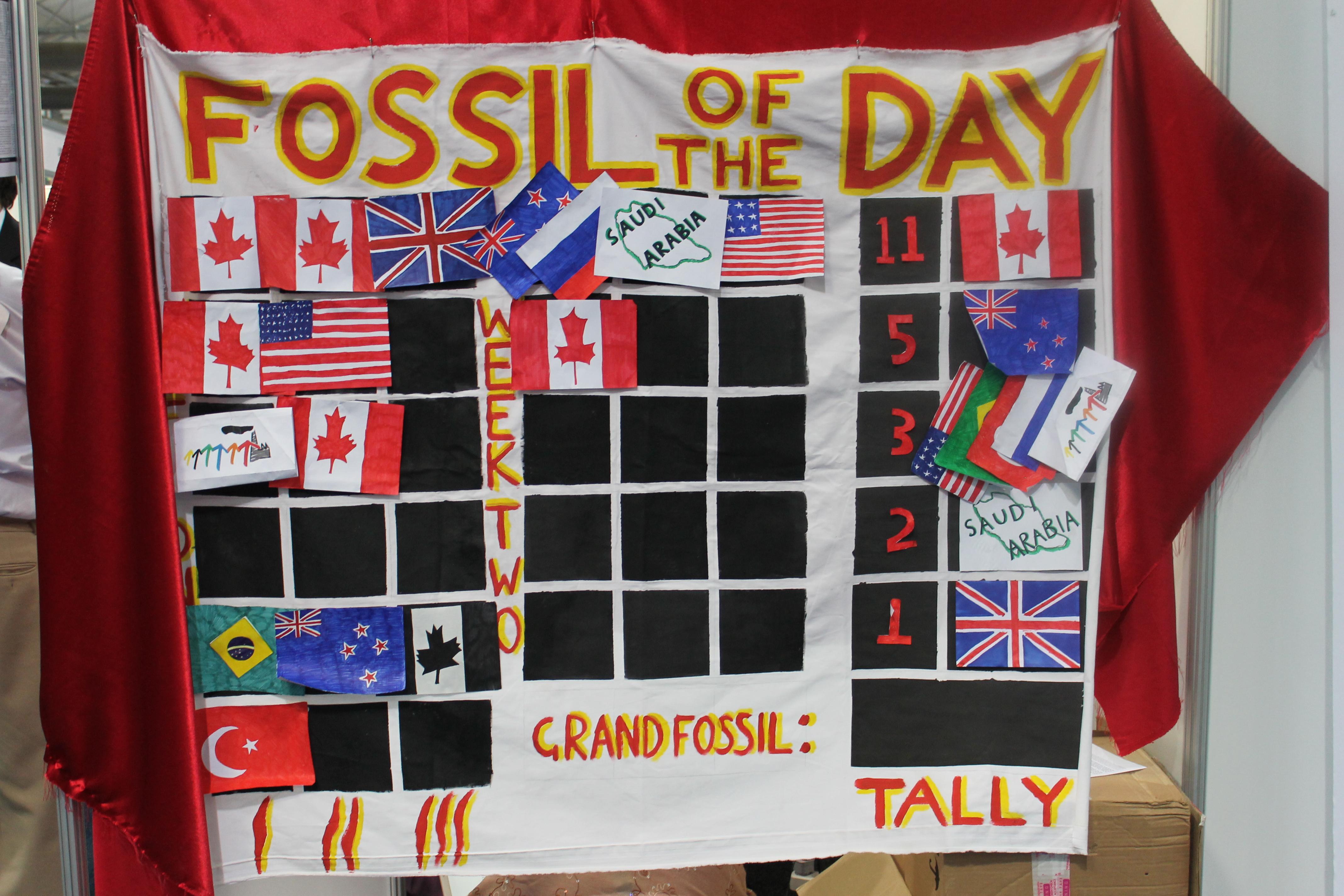
Anyone want to guess who gets the distinction of Grand Fossil? (This is from yesterday, when Canada had 11 awards)
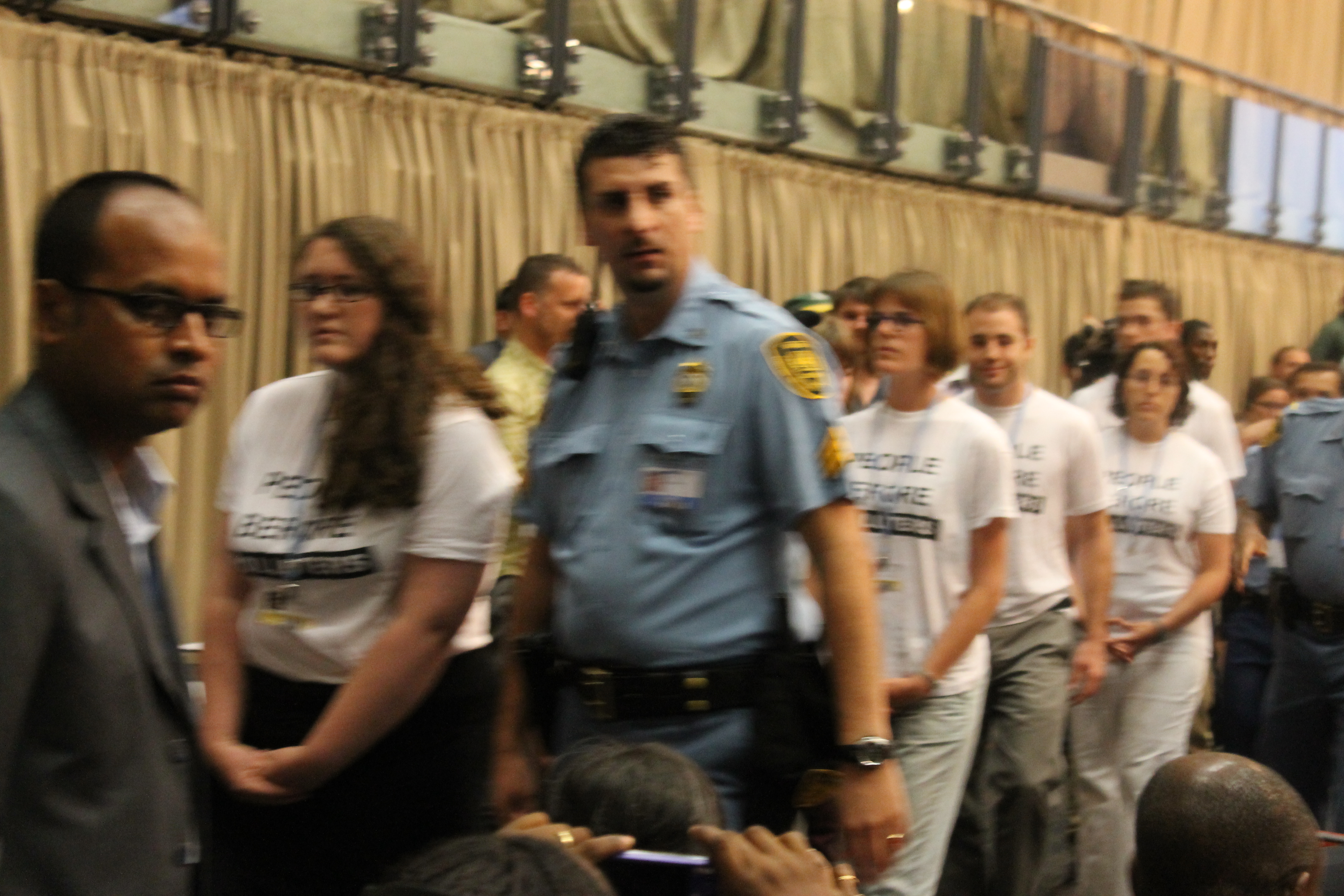
Then, when I was in the plenary, I was surprised, and seriously amused and delighted, by the action of 6 youth in the Canadian Youth Delegation who stood up in silent protest, with t-shirts that had on the front “People Before Polluters” and on the back “Turn Your Back on Canada.”

For shame, Canada. For shame.
Of course, this peaceful, silent protest was a security risk and they had to be ushered out. All they did was stand. It was the most effective protest I’ve ever seen, and one that made the security officers, and COP 17 officials, seem even more ridiculous. Check out the video of Kent’s speech below. At about the 3.30 minute mark, you’ll here a round of applause – listen to how long it is! And it was much louder from where I was standing; you couldn’t even hear Kent. That’s for these amazing youth.
As soon as they stood up, and I was just behind them in the back corner, everyone around started taking photos (and hopefully someone got some video). I also took photos of them being led out, and was yelled at by the security guard to stop filming them. They were taken out a back exit, and then when I went to get back to my laptop, I was stopped by another security guard until I showed him my computer. Craziness.

Taking a stand! (Elizabeth May in green at the front)
It. Was. AWESOME!!

The six youth being escorted out. Second from the right is Brigette DePape (the “Rogue Page”). Peter Kent is onscreen in the background.
General Secretary of the Mennonite Church in Canada, Rev. Willard Metzger, wrote a great blog about yesterday. Additionally, Moderator Mardi Tindal’s excellent blog post is getting some publicity on Canadian social media sites, particularly Twitter. The Globe and Mail reported it yesterday, and today they have an article an about Kent apparently changing tack and seeking a binding climate treaty by 2015. There was another article about the youth here. And to hear about it in the 6 youths’ own words, read about it here or listen to a podcast here.
(insert raucous applause and whoops)
Hear Cam Fenton of the Canadian Youth Delegation speaking after six of its members (he wasn’t one of them; they strategized to make sure he keeps his accreditation) were thrown out of COP17:
After meeting up with Caroline for some lunch, we ran into some of the youth from the Canadian Youth Delegation, including the six youth who participated in the protest. They told us that, after they were escorted out, they were grilled with questions for about 10 minutes, with the security guards asking them who they were, what organization they were with, who their leader was, etc. They just kept quiet, and were eventually escorted out via the security exit and had their accreditation revoked.
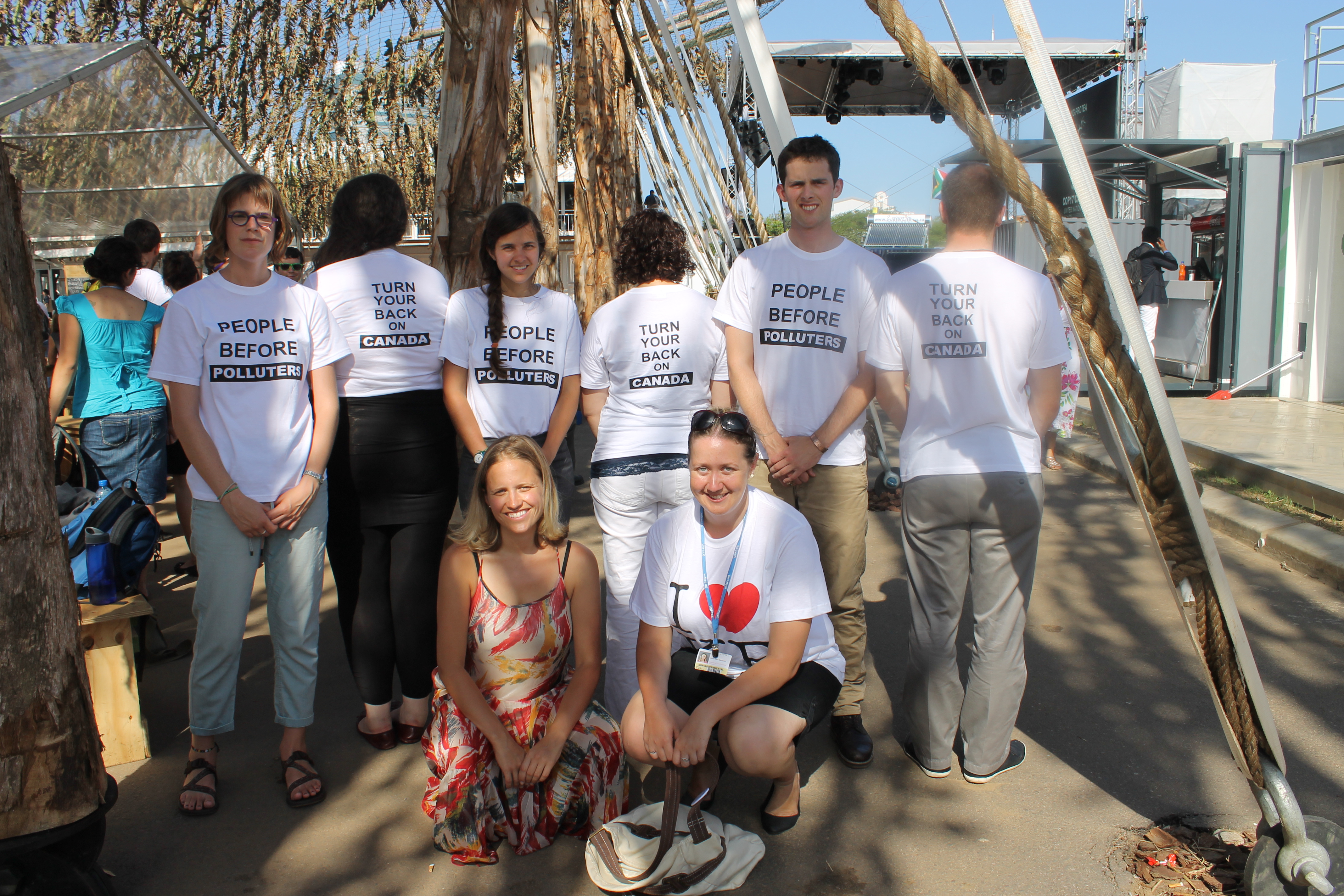
Me and Caroline, in solidarity with the Canadian Youth Delegation
Later on, we came across one of the signs I’ve mentioned previously, depicting Stephen Harper. Of course, I had to get a picture with it!

Me in my I (heart) KP (Kyoto Protocol) shirt. I wore it to yesterday’s plenary and today’s briefing
Then this morning, I skipped out of the Youth for Eco-Justice program briefly to attend one of the daily briefings with Guy Saint-Jacques, Canada’s Chief Negotiator and Climate Change Ambassador. The sessions are meant to provide information on the status of the COP 17 negotiations to interested Canadians accredited as observers to the UNFCCC (comme moi).
I don’t want to go all conspiracy theory on you readers, but it was a bit odd that for this briefing, the day after the infamous protest, the time suddenly changed from 8:30 am to 8:00 am, and then later the rooms were also changed. It took me awhile to find the actual room, since I had to find the first room in the huge ICC complex (the room was empty and the media guy told me the Canadian briefing was happening there at 8:30, so I’m not sure why the room had to be changed), and then the correct one, and there was also a group of people who arrived right at the end of the briefing, at 8:30, who obviously hadn’t gotten the message. But there was a small note on the door to the first room, so maybe it wasn’t a conspiracy after all. 🙂
Anyway, this briefing, I was told, was one of the most exciting briefings yet. When it was time for questions, all of them displayed frustration and disappointment with Canada’s position. One youth (I’m assuming from the Canadian Youth Delegation) asked the ambassador, “Can you look me in the eye and tell me you’re negotiating in good faith on behalf of my generation and not [on behalf of] the tar sands oil companies?” Guy Saint-Jacques responded, and the youth repeated his question, which is when Paul Booth, Deputy Minister of Environment Canada, and said “I’m looking you in the eye and…”
And four youth stood up, one even tipping his chair over, and stormed out of the room. While it was exciting, and it made their point, it also sent the message that “we can’t talk to you.” And as Moderator Mardi Tindal said, “Pragmatically, we need to find a way forward. We need to listen to each other long and hard enough, listen intently enough, to find a way forward because we can do nothing less.” To read about additional conversation between these youth and Paul Booth, click here.
Then, later today (and I wasn’t present for this, unfortunately), an American youth, Abigail Borah, was ejected from the plenary. Willard Metzger writes about it here and the New York Times describes the scene here. And if you’re on Facebook, check out the set of photos here. And here’s a short video clip of it happening:
Seriously, when will our leaders and negotiators get it? And why does it seem like it’s only the youth who give a damn? Or is it only because we have less to lose by getting thrown out, and more to lose by not taking a stand?
Wandering Around the COP
I’ve noticed that I have a few cool photos of activism from around the COP that I haven’t shown yet. So this is a bit of a fusion of those random photos and some of the cool COP-related activities that happened yesterday, my first day of accreditation. I was finally allowed inside!!
But first, a couple of randoms:
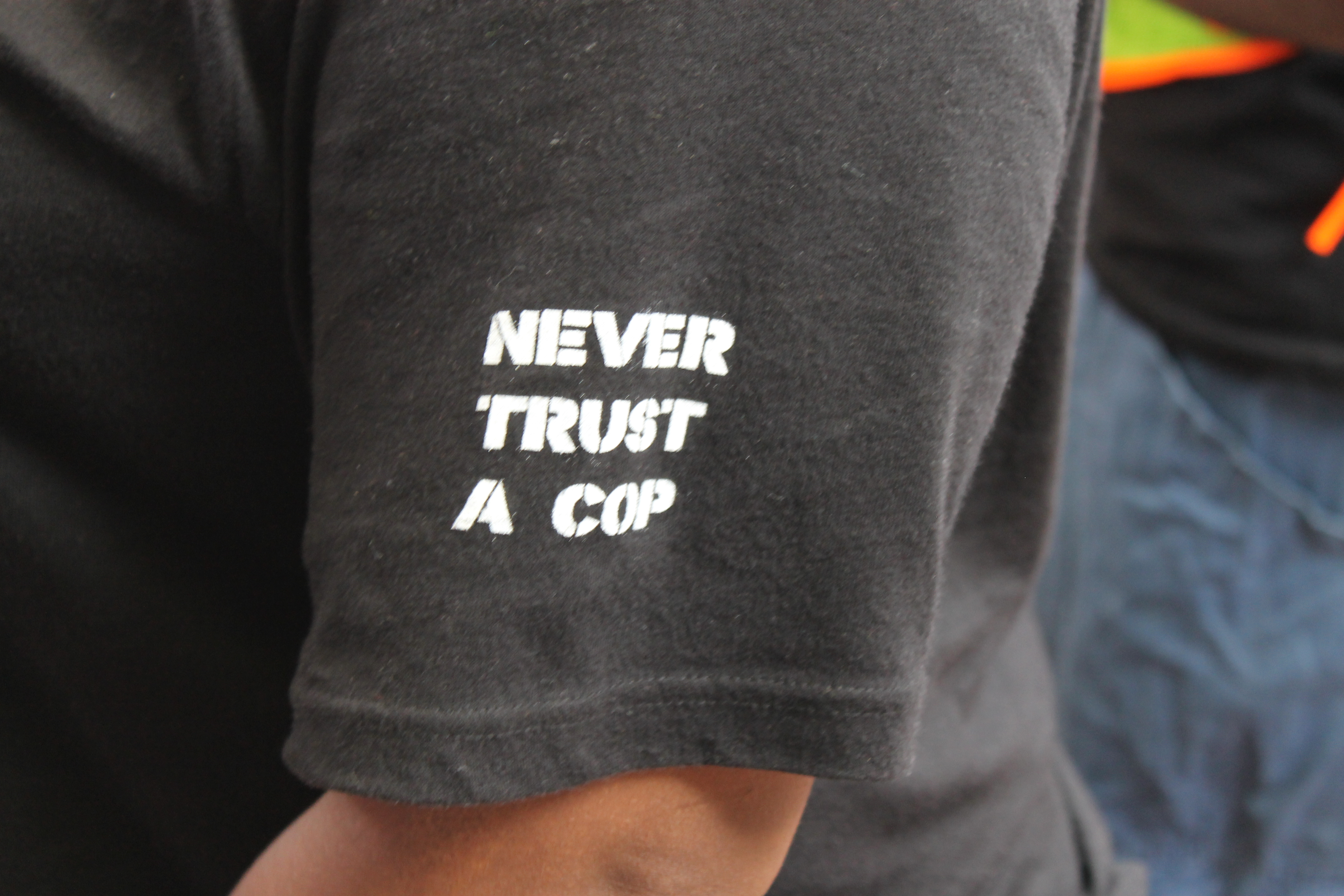
At the People’s Space at Kwazulu-Natal University

Another t-shirt
Yesterday, I went inside the ICC (International Convention Centre) for the first time. It was pretty awesome to experience it. But it also made me realize, once I got in, how exclusionary the process truly is. You need to be a delegate to get inside, and that can be a difficult process. Plus, not all the delegates have access to all the parts of the ICC process; as one of the KAIROS partners said on Monday, you really notice what colour your badge is (hers and mine are yellow, for NGOs). Today and tomorrow, you may even need a special ticket to get in to the plenary. It really makes me wonder how much say “the people” have in any of this.
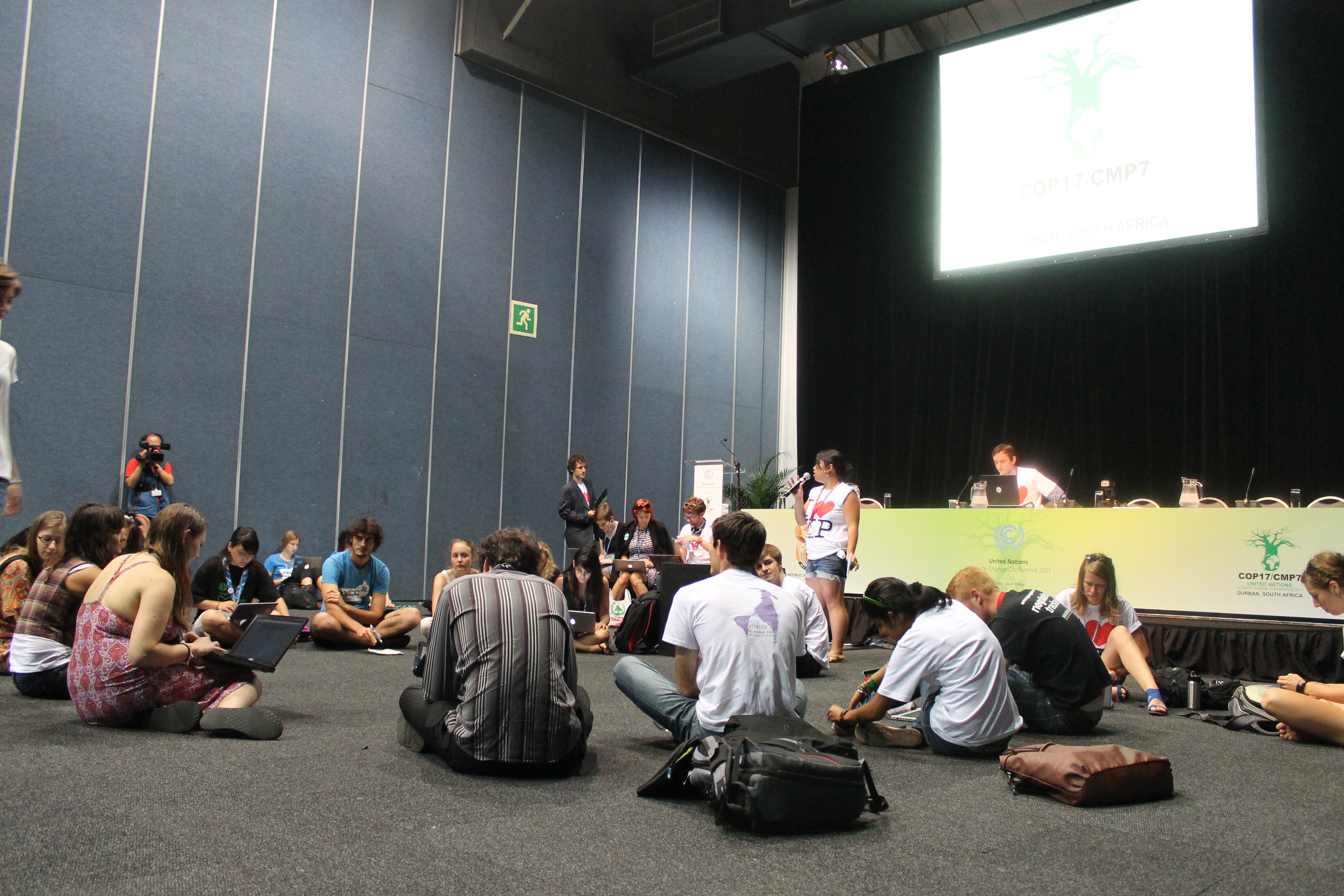
Inside the COP, at the Youngo meeting
At the youth (Youngo) meeting that morning, I heard about, for the first time, a community about 20 minutes north of Durban that really felt the rains we all experienced on the eve of the COP. This community is called Kwa Mashu, and on that Sunday night, around midnight, there was huge flooding of the river. Homes were destroyed, and 10 people were killed. The community was frustrated with the media because the media would come in, do a story, and then just leave without having done anything for the community.
People died the day before the opening of the plenary, from extreme weather. In their opening statement on the first day of COP, this group of young people who went to the community and made a short video of the aftermath were told (I’m not sure by who) not to mention that people had died in the floods before. How does that make any sense?!?!
Here’s the short video we saw yesterday morning:
Then, I was able to get into the plenary, which was really cool. This is where all the representatives (heads of state, ministers, and I think a couple of princes thrown in) talk in front of all the other representatives, and the observers. I heard from the representatives of Singapore, Belize, Morocco, the Marshall Islands, Liberia, Tuvalu, Qatar, Sweden, Malta, the Maldives, Nigeria, and finally, Canada. All of the countries before Canada expressed how important the issue of climate change is for their countries. Many declared the importance of the Kyoto Protocol. Canada, obviously, did not.

Tuvalu’s Minister of Foreign Affairs speaking at the Plenary
Several of the representatives had inspiring, and devastating, things to say:
“We must not miss this opportunity to curb climate change for the sake of our children.” (Singapore)
“My country’s future is now in jeopardy.” (Marshall Islands)
“We need to collectively reduce our greenhouse gas emissions.” (Liberia)
“We have a concern for the vulnerabilities of other island nations.” (Malta)
“We are currently on a path of a rise of 4 degrees Celsius, which will certainly wipe out my country.” (Maldives)
“Durban is a beautiful city and we should not [contaminate/ruin] it by killing the Protocol.” (Nigeria)
“We want to say to our children, ‘It was Durban that saved Tuvalu.'” (Tuvalu)
“Kyoto, for Canada, is in the past.” Peter Kent
*********************************************************************************************************************
After this pretty intense plenary, we had some levity in the afternoon in the form of a mock soccer game between the 1% bankers/clowns and the 99% Robin Hoods. The prize? Control of the Green Climate Fund.
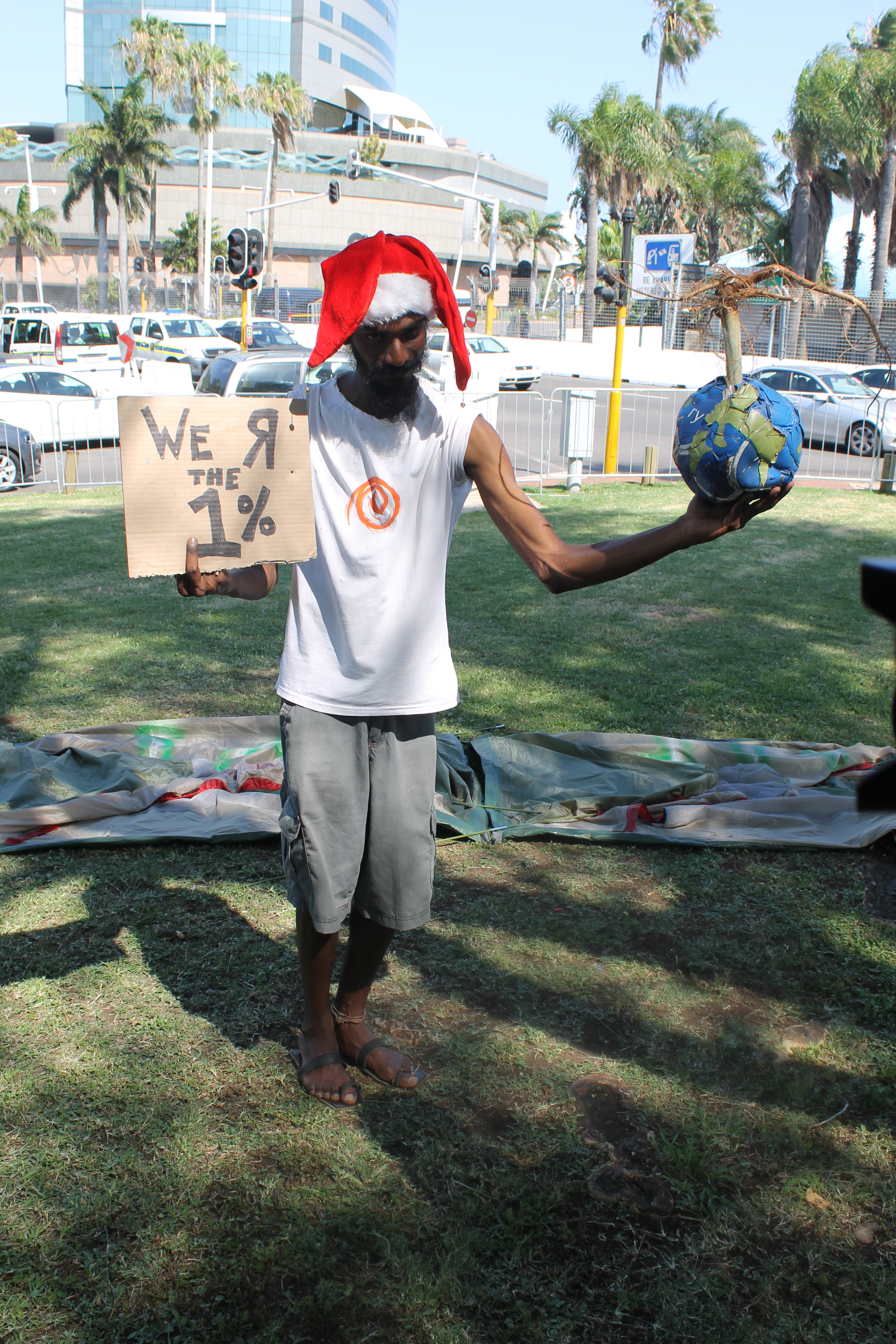
A participant in the soccer match

The Robin Hoods
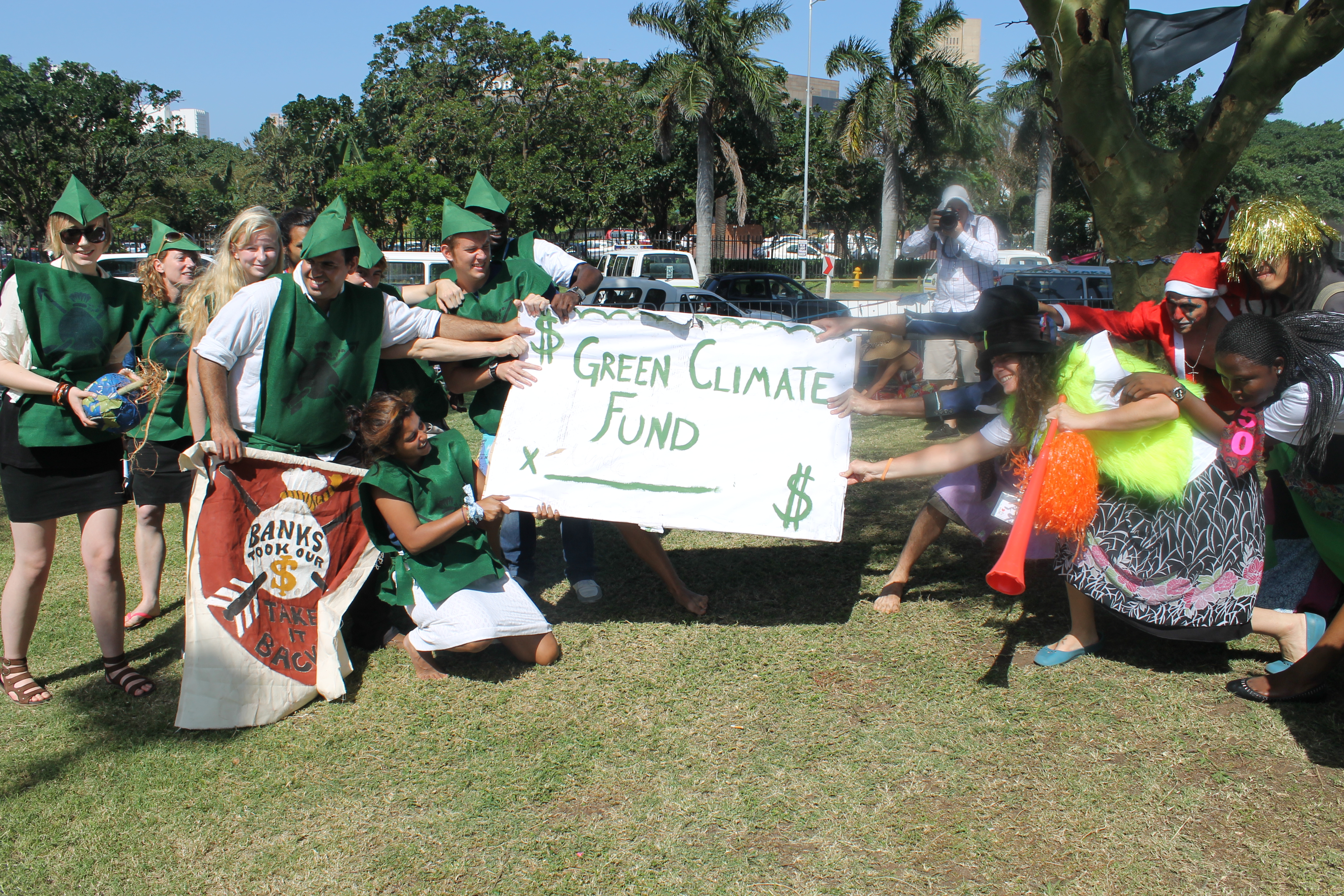
Fighting over the Green Climate Fund
After the soccer match, I went back into the ICC and attended a panel discussion called “Climate Justice and Food Security: Moral, Ethical and Spiritual Imperatives.” Moderator Mardi Tindal was speaking on the panel, along with Rabbi Hillel Avidan (rabbi at the Temple David of Durban), Sister Jayanti Kirpalani (Regional Director, Brahma Kumaris World Spiritual University – Europe), Rev. Nicta Lubaale (General Secretary, Organization of African Instituted Churches), Bedria Mohammed Ahmed (Co-chair, Women of Faith Network, Ethiopian Interfaith Development Dialogue and Action), Presb. Patricio E. Sarlat Flores (Executive Secretary, Episcopal Commission of Caritas Mexico), and Dr. Ela Gandhi (Honorary President, Religions for Peace). The panel was moderated by Cardinal Wilfrid Napier (Chair, KwaZulu-Natal Inter-religious Council).

Moderator Mardi Tindal with Sister Jayanti Kirpalani
The Moderator said that Canadians expect more, and we are letting our politicians know that; she also spoke about the Canadian Interfaith Call for Leadership and Action on Climate Justice. Rabbi Hillel Avidan spoke of how, as time goes by, faith communities find that they have a lot in common, while Sister Jayanti Kirpalani spoke about respect, saying that we need to learn to respect ourselves before we can respect animal and plant life, and that respect is what’s missing from today’s world.

The Panel
Bedria Mohammed Ahmed told us that there are over 750 verses in the Qur’an that deal with the environment and maintaining the balance of creation; Dr. Ela Ghandi explained that even though all our scriptures talk about the climate, humankind has failed in maintaining this balance. Rev. Nicta Lubaale told a story about traveling through Maasai territory in Eastern Africa. He had gotten out of his car, and his eyes were all red due to allergies. A Maasai woman came up to him, trying to sell him some goods she’d made. I experienced similar scenes when I was traveling through Kenya and Tanzania. But the woman noticed his red eyes, and she put the goods away, saying in Swahili “You’re sick, you’re sick.” Rev. Lubaale explained: “Her spirituality stops her from doing business when she realizes someone is weak, even if that person is richer than her.” I think that’s something we all need to learn.
And here’s something I didn’t get to see yesterday, but it was pretty spectacular:
A World of Worship
Sunday, as every Christian knows, is a day of rest. Well, for Caroline and I, it was anything but. It did include lots of worship, though!
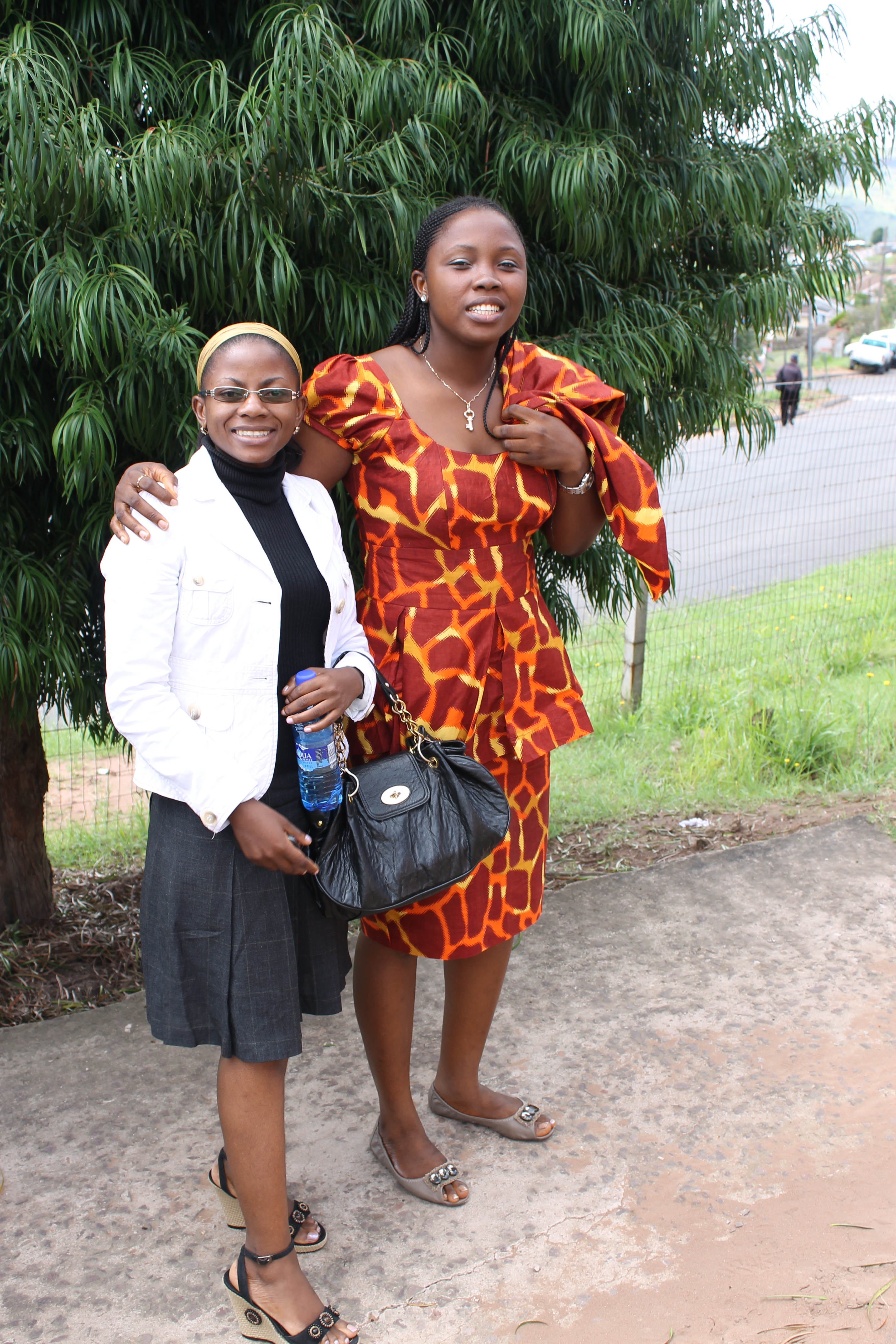
Maggie (Zambia) and Njideka (Nigeria), ready to worship
We went to a Methodist church in one of the townships on the outskirts of Durban. It was a very moving service, and also one of the longest I’ve ever been to (nearly 3 hours!). The congregation was super welcoming, both during the service and after. We all introduced ourselves, and Lungelo (from South Africa) from our group translated the Zulu sermon for us. After the main part of the service, a woman came up and gave an informative talk about HIV/AIDs, including the use of condoms, to the congregation.
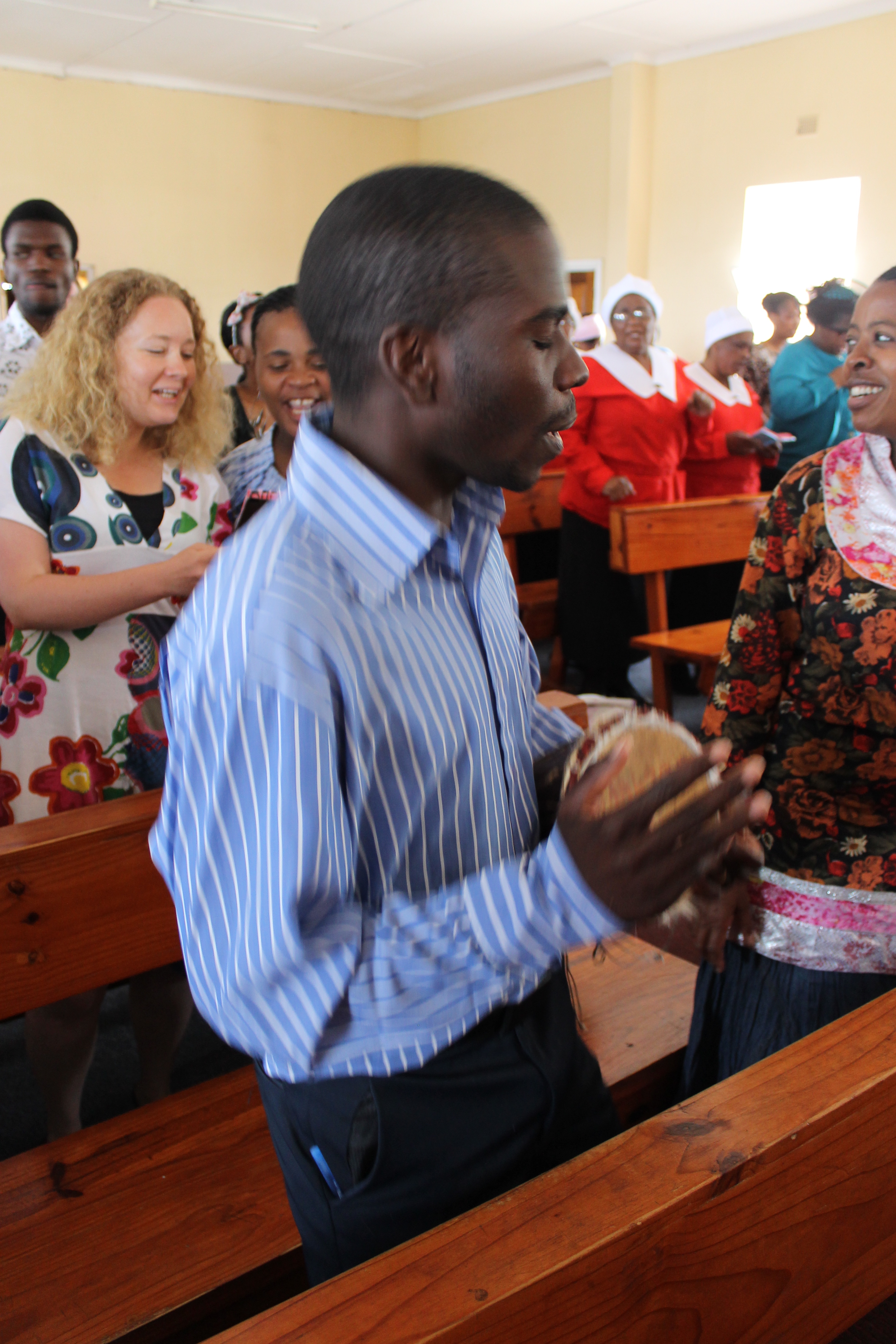
Langa (Malawi) playing his drum
After the service, Caroline and I went downtown, back to the Diakonia Centre, for a meeting with KAIROS partners (some of whom are also UCC partners). It was an interesting journey to get there, which involved a jaunt in the back of a pick-up truck throughout the township. I was asked how I got out of the pick-up truck (I was wearing a dress). My answer: gracefully. Really, it was anything but.

KAIROS meeting with partners
Jim Davis, of KAIROS, has written a fabulous blog post on the discussion we had.
Next, we headed over to the interfaith service. Caroline Foster has written a great summary of this service:
The multi-faith service this evening represented the diversity of voices from religions around the world. I especially enjoyed the meditation component where we sent good vibes into the atmosphere for all of creation. Finally, relax. Take three deep, long breaths. Sit comfortably. I will leave you with some words from the service that I hope you can use today to send out your own good vibes:
There is enough for everyone’s needs, but not for everyone’s greed – Gandhi
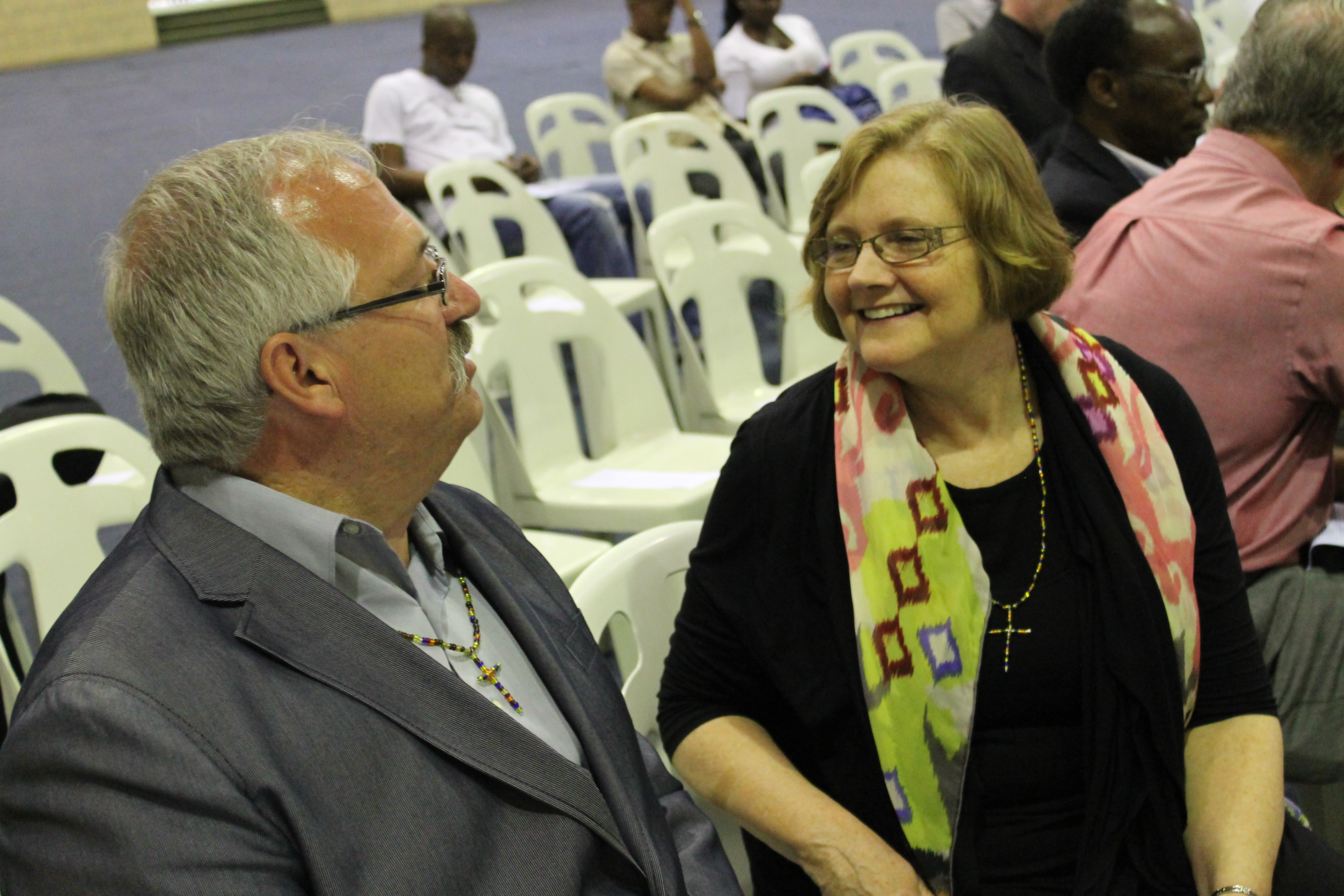
General Secretary Willard Metzger (Mennonite) and Moderator Mardi Tindal (UCC)
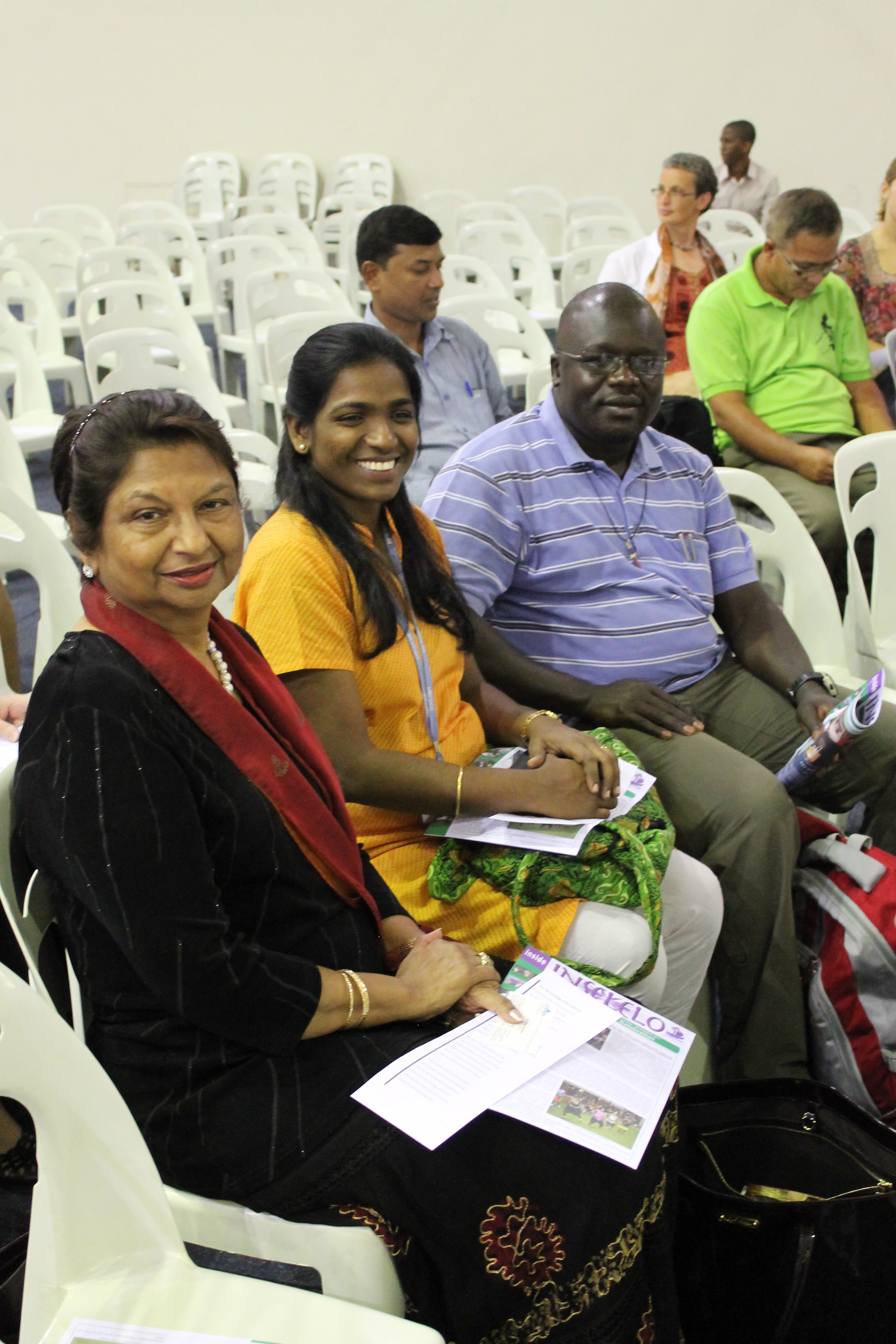
Interfaith service
There were great songs throughout the service, as well as readings and reflections on the scriptures from different faiths. It really showed that, while we have our differences, we can come together on the important issue of climate change.
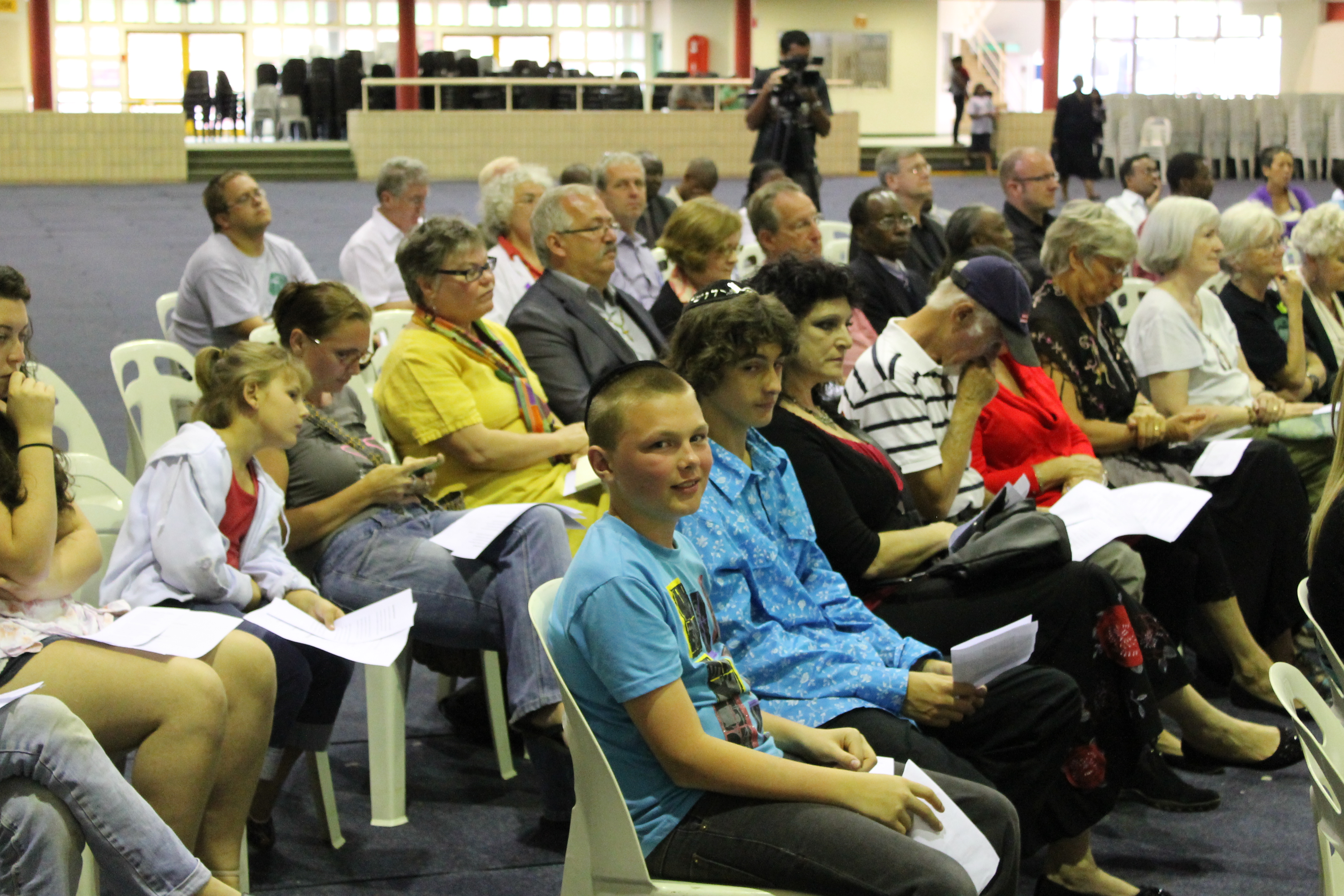
Interfaith service

Interfaith service
Then on Monday, I went down to the ICC (International Convention Centre) for the first time. There’s a big part at the entrance to the ICC where anyone can go, filled with cool art installations on climate change and lots of booths on the issue. I’m trying to get accredited, but I’m not yet, so I can’t go right inside, where the other delegates go.
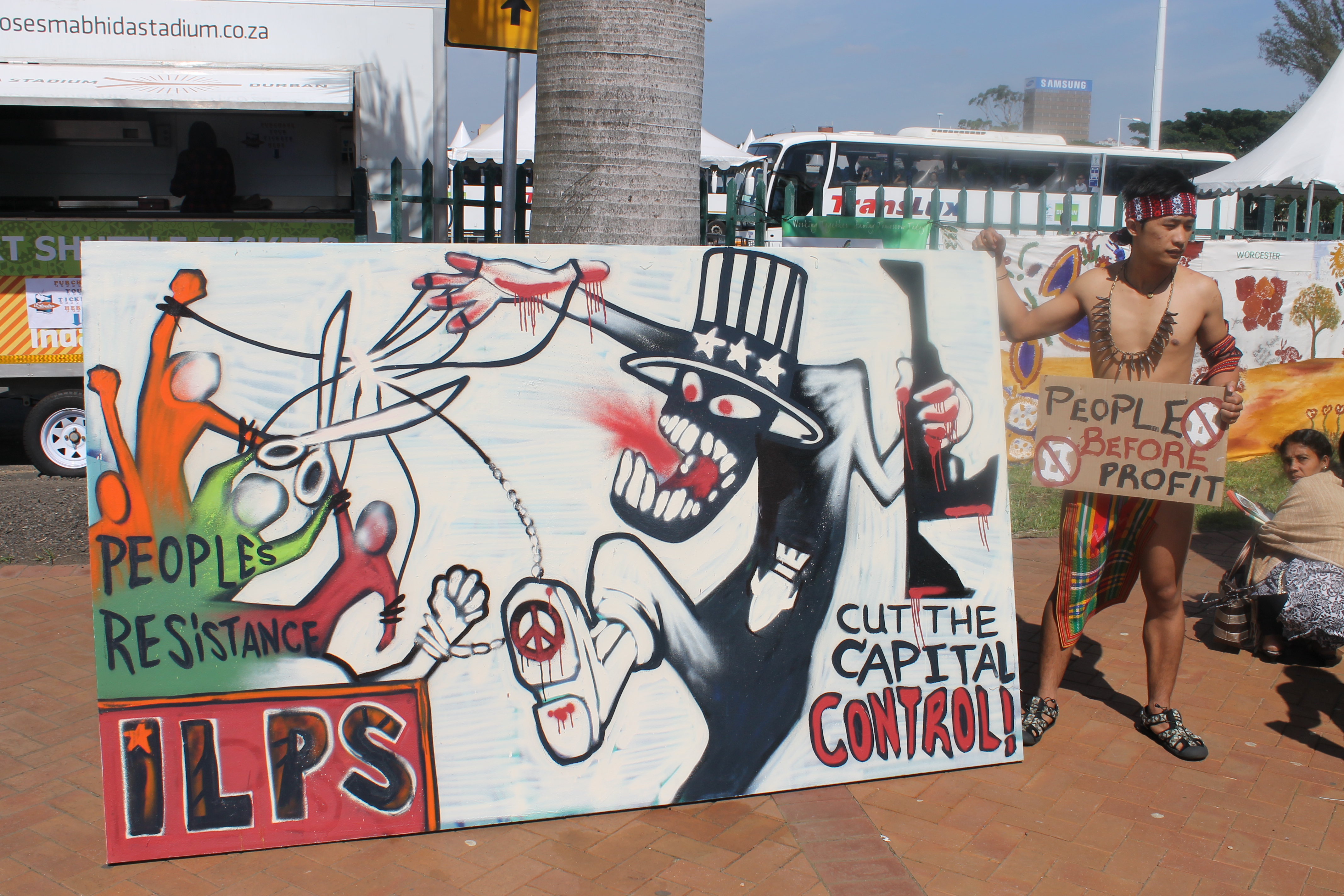
Outside the ICC, where COP 17 is taking place
Monday was also the day I went to a Women Religious Leaders and Climate Change panel at the Diakonia Center. The panelists were Ela Ghandi (who happens to be Mahatma Ghandi’s granddaughter) from the World Council of Religions for Peace, Rev. Gugu Shelembe of the Thukela Amajuba Mzinyathi Christian Council, and Rev. Priscilla May McDougal, from the USA (United Church of Christ).
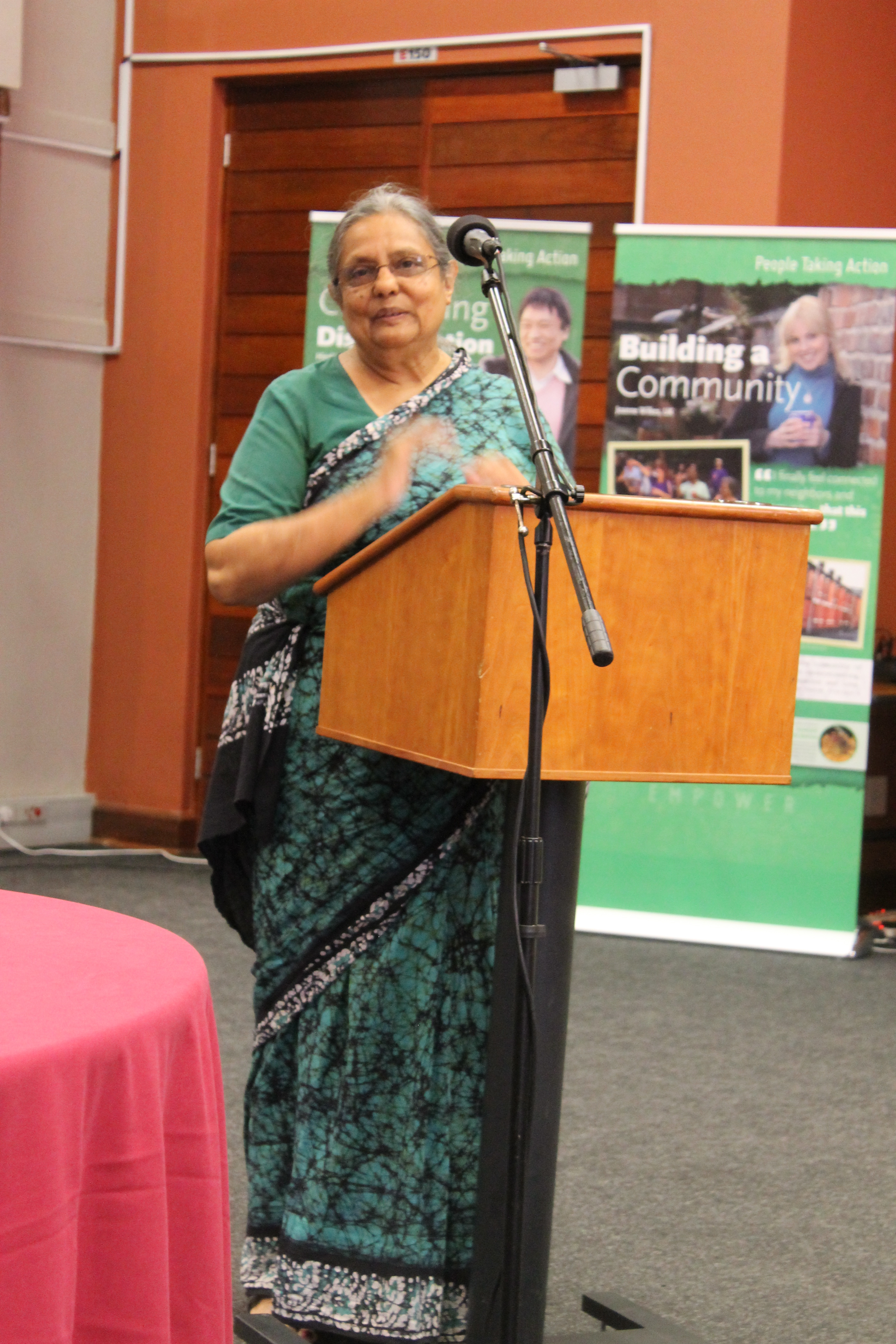
Ela Ghandi
Some key quotes from the participants (note: I’m not sure if I have these written down verbatim):
Ela Ghandi: “I would like to believe that few women are involved in the spread of hatred…We build our faith around love, compassion, goodwill and tolerance.”
Rev. Gugu Shelembe: “We need to reflect theologically, to invite people to understand our call to be stewards of nature…It all begins with me, with my influence on my family.”
Rev. Priscilla May McDougal: “Women have a certain compassion that we are born with, saying ‘This child is mine and I want it to live.'”

Panel Discussion
The most powerful feeling I was left with, and it was one of despair mixed with a new passion to get things done, was after Rev. McDougal said, while breaking down, “This conference is telling us that in 2020, this won’t be an issue anymore because we’ll all be burned…I have a beautiful granddaughter and I want her to live in a world where she won’t be cooked.
“We need to stop being hopeless. We need to act. Walk to the sea (referring to Ghandi and the salt march).”
Future Genocide in South Africa?
Today is Canada’s National Day of Remembrance and Action on Violence Against Women. And so I think today is fitting to examine some of the prejudices and conflicts that continue to bubble under the surface of South African society. Aside from the homophobic and sexist comments I’ve heard around Durban, and within the Youth for Eco-Justice Conference itself, it is the racial tension that has most surprised me, and which is most likely to devolve into large-scale physical violence. (side note: to learn about one combination of homophobia and sexism in South Africa, corrective rape, click here)
When I arrived in Cape Town, I was keen to learn about the history of Apartheid. Both my undergraduate and postgraduate studies have focused on international human rights violations, particularly genocide, ethnic cleansing, and war crimes. Apartheid is up there as one of the worst systematic violations of human rights, in place from 1948-1992. I actually didn’t realize that it began in 1948; I thought it was sometime in the 1950s. The reason 1948 surprised me so much is because it was only 3 years after the Holocaust. You’d think that after such a horrific example of the ultimate form of racism and prejudice, people would be less inclined to create a similar system. Especially because a lot of Jewish people (albeit white Jewish people) emigrated to South Africa. Although I guess we only need to look at Israel to see that victims often become perpetrators of collective punishment and other forms of human rights violations.
And then I arrived in South Africa, and learned that it is the most unequal society in the world; the gap between the riche and the poor is the largest of any country. This inequality is certainly not conducive to peace.
Soon after arriving in Durban, I heard about a “white” genocide in South Africa. At first, I doubted this. It sounded similar to what white supremacists say about such things as intermarriage or immigration. And I’d also heard about the white South African who got asylum in Canada, and everyone kinda dismissed that as being a pretty wacky decision. But then I looked into it, and while I wouldn’t necessarily label what’s happening in South Africa as “genocide,” it’s definitely disconcerting. And it’s not only against white people.
Some refer to a new kind of apartheid in South Africa – xenophobic violence aimed at African refugees, especially those from Zimbabwe.
And even more alarming, Genocide Watch has placed South Africa at a 6 – “preparation.” 7 is actual genocide.
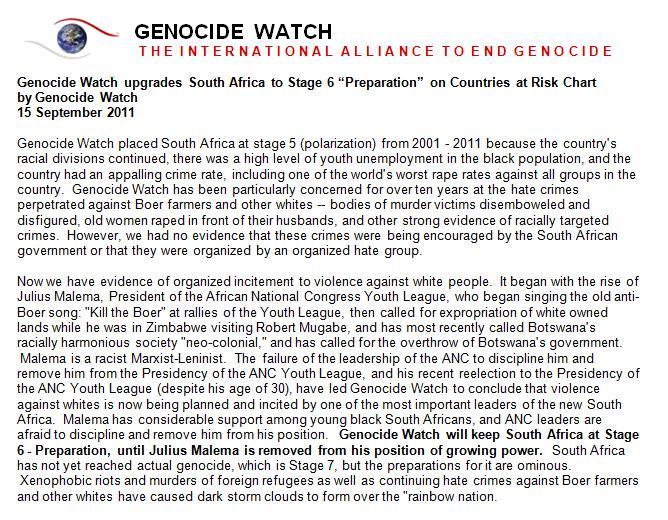
The update from Genocide Watch
And since I’ve been here, I’ve witnessed this fairly extreme racial tension. First, many of the roads around Durban have been renamed, and apparently in some of the mainly white areas, where the street names are now named after Black militants, the names have been scratched off the signs. Second, at the Global Day of Action march on Saturday, things turned a bit political and songs were sung essentially saying “bring me my machine gun” and “kill the Boer.” The important thing to note here is that there are two main white communities in South Africa – the British-origin South African and the Afrikaaner. The British South Africans, generally, were against Apartheid and now refuse to speak Afrikaans, as it is seen as the language of the oppressor. “Boer” is the Afrikaans word for farmer, and now (I think – I’m a bit confused about this part – South Africans please correct me) generally refers to white people or white farmers now. And there have been many cases of Afrikaaner farmers being killed, often in incredibly grotesque, horrible displays of sadistic torture.
But the most alarming example I personally witnessed here in Durban was at a gathering of South Africans and Zimbabweans, demanding land reform, which is something, in theory, of which I am in favour. But not in the way it was expressed here. The Zimbabweans present spoke up and told the South African farm workers that they should learn from the Zimbabwean example (namely – getting rid of White farm owners). Zimbabwean veterans were mentioned as being particularly useful, and from my understanding, they violently threw the white farmers off the land. There were also shouts of support for Mugabe, which was disconcerting. Even Nando’s (a popular South African restaurant) has a commercial depicting Mugabe as the last dictator standing!
And then, I got very uncomfortable. A South African farm worker stood up and yelled out, “Those white farmers don’t want you baboons on their land. So we baboons need to kick them off the land!” Which was met with rapturous applause. Since then, I’ve been told that, after Nelson Mandela dies, there’s a belief that there will be attempts to kill or remove all the white people in South Africa, a concept, I was told, was called uhuru. This is actually a misuse of the word uhuru, which means liberation or independence; it has been twisted, in the way it was explained to me, as a way of ” liberating” the country by killing White people. I’d studied critiques of the South African Truth & Reconciliation Movement in school, and how it didn’t necessarily work as well as some think or hope or believe. But after being in South Africa for 2 weeks, now I get it; now I understand why South Africa might be at a “6.”
*****************************************************************************************************************
As I said at the beginning of this post, today is Canada’s National Day of Remembrance and Action on Violence Against Women. Twenty-two years ago today, on December 6, 1989, 25-year-old Marc Lépine entered the École Polytechnique in Montreal, Quebec, Canada and shot twenty-eight people before killing himself. Armed with a (legally obtained) semi-automatic rifle and a hunting knife, Lépine killed 14 women. His suicide note blamed feminists for ruining his life and included a hit list of 19 Quebec women who Lépine viewed to be feminists and wanted to kill.
- Geneviève Bergeron (born 1968), civil engineering student
- Hélène Colgan (born 1966), mechanical engineering student
- Nathalie Croteau (born 1966), mechanical engineering student
- Barbara Daigneault (born 1967), mechanical engineering student
- Anne-Marie Edward (born 1968), chemical engineering student
- Maud Haviernick (born 1960), materials engineering student
- Maryse Laganière (born 1964), budget clerk in the École Polytechnique’s finance department
- Maryse Leclair (born 1966), materials engineering student
- Anne-Marie Lemay (born 1967), mechanical engineering student
- Sonia Pelletier (born 1961), mechanical engineering student
- Michèle Richard (born 1968), materials engineering student
- Annie St-Arneault (born 1966), mechanical engineering student
- Annie Turcotte (born 1969), materials engineering student
- Barbara Klucznik-Widajewicz (born 1958), nursing student
Global Day of Action on Climate Change
Saturday was the Global Day of Action. Demonstrations against climate change took place around the world, including in Toronto. In Durban, civil society gathered for COP 17 marched through the streets, attracting a lot of curious onlookers.

Me with Willard Metzger and Moderator Mardi Tindal, before the march
The faith contingent met at the Diakonia Centre in central Durban. Canadian faith leaders Willard Metzger (Mennonite) and Moderator Mardi Tindal (UCC) were two of the faith leaders who marched at the front, with the We Have Faith banner.

Moderator Mardi Tindal preparing to march

Moderator Mardi Tindal with Joy Kennedy and Caroline Foster (KAIROS Canada)

A photo-op pour moi
To get to the Diakonia Centre, we hitched a ride from the Glenmore Pastoral Centre with the “We Have Faith” caravans that travelled from Nairobi to Durban in the weeks preceding the COP. I’ve spoken to many of the participants of that journey (Claire from the UK who’s part of Youth for Eco-Justice was also part of it), and seen some video clips, and it looked amazing!!

Jim Davis of KAIROS Canada

Moderator Mardi Tindal speaking with another faith leader
Reports vary, but there were anywhere from 3,000 to 20,000 people marching that day. It certainly felt like many more; George, who took my video camera and climbed onto a terrace of a building to get an aerial shot, told me that he tried to see the beginning or the end of the march, and he couldn’t. There were that many people.
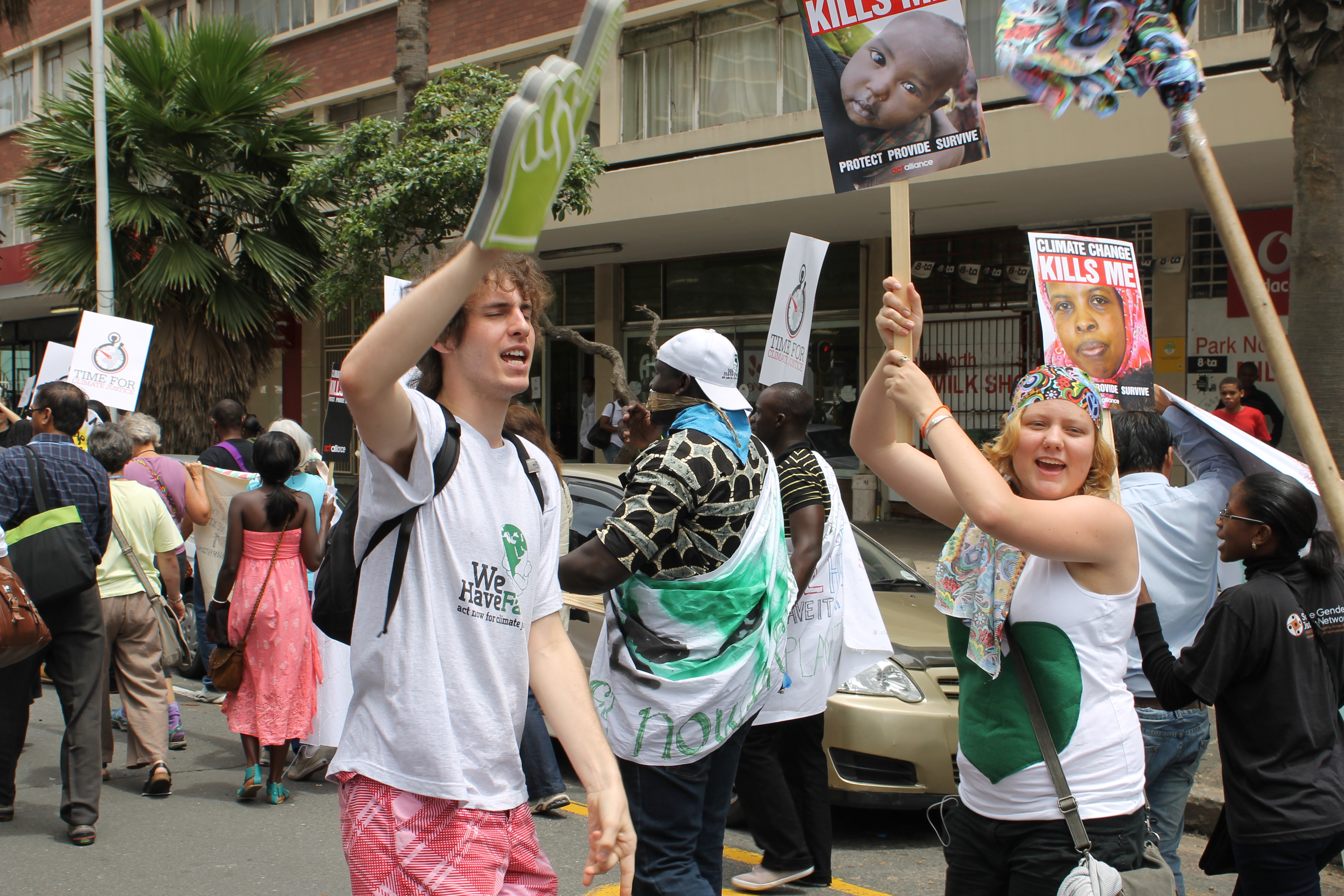
Joakim (Sweden) and Thea (South Africa) at the march

Marcelo (Uruguay)

Great signage

More great signage

Claire (UK) and Thea (South Africa)
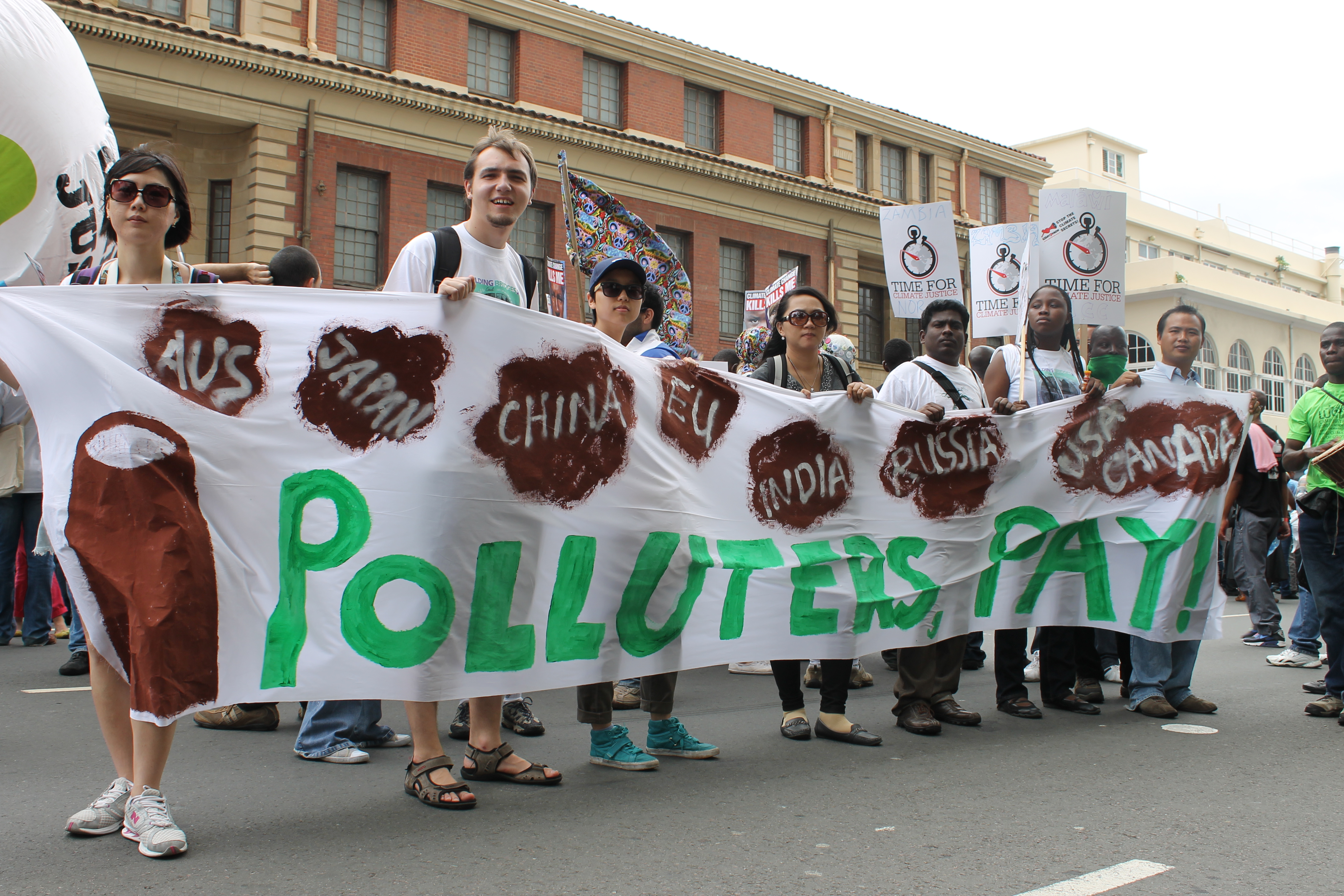
Youth for Eco-Justice at our best!
Some words from Caroline Foster, of KAIROS Canada:
Some of the most powerful songs, chants and dances of protest took place while we were waiting to join with the wider rally. There was a large contingent of youth who have travelled on the caravans. They were a vibrant group leading others in the chants and songs. One in particular stood out to me. One young person began by calling out “hello?” to which everyone else in the group would respond “hello!” and this was repeated several times before the leader would give a statement such as “we came from all across Africa and will not leave without being heard” after which everyone would cheer. I found this particularly relevant as it is pertinent to the situation that our calls are answered. It is one thing for us to call out, but who is listening and who will answer? This chant demanded a group response that all were eager to give. “This is our future,” they said “and not their future.” They were very clear that they have heard enough talk. It’s time for action.
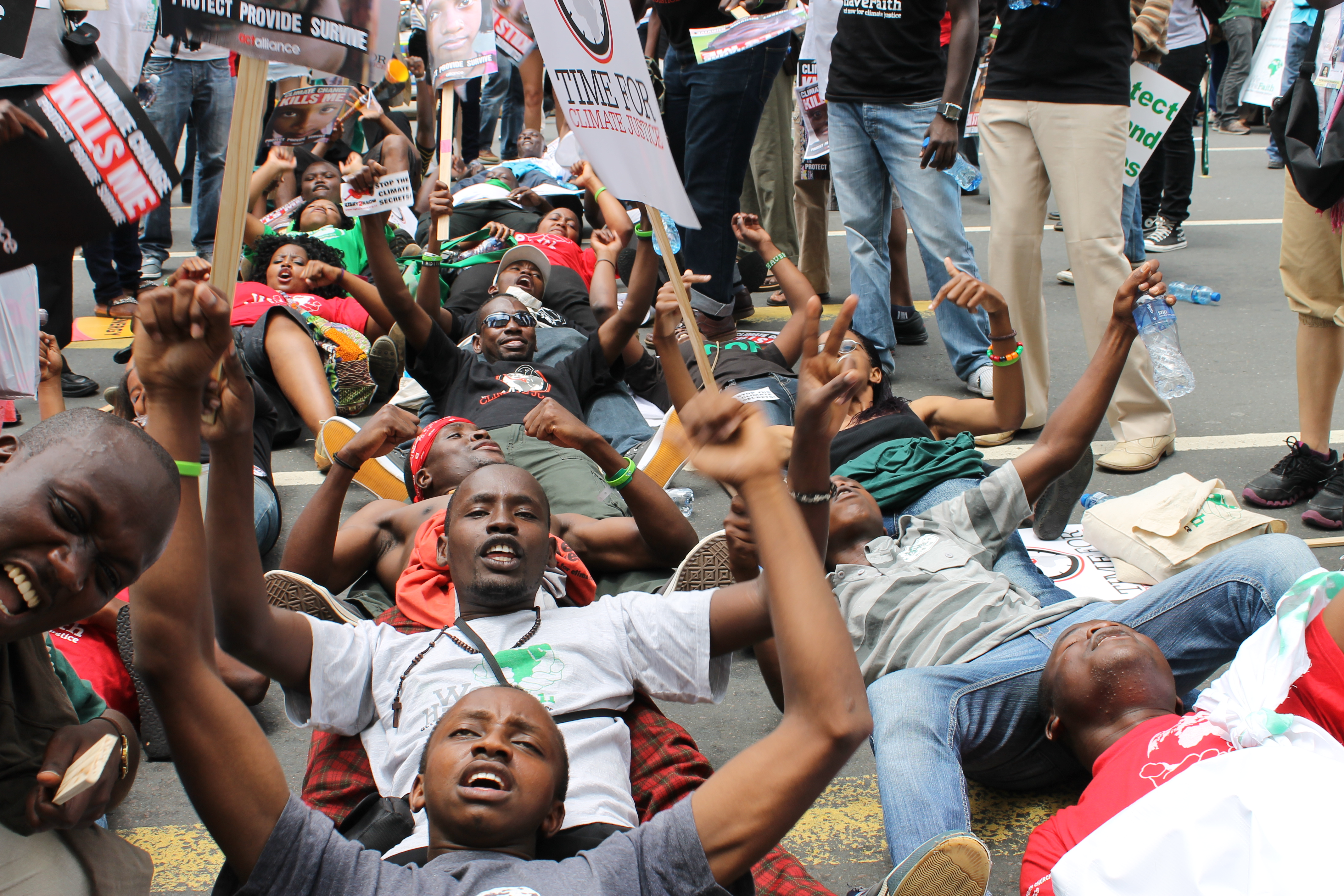
A mini demonstration in the march

Maggie (Zambia) and Njideka (Nigeria)

Youth dancing
The police presence was exceedingly high. At previous rallies I’ve been to, I’m never sure if the police are there to protect the public from us, or us from the public. At London’s (UK) Reclaim the Night march that I participated in 2 years ago, the police were definitely there to protect us. At this march, I wasn’t so sure. Mainly because the majority of them had riot shields, and they were plainly blocking us from entering certain establishments (such as McDonalds…not sure why…and a hotel). And we spotted police with guns on the tops of buildings along the route, particularly at the intersections. It was a bit unnerving.

Obviously a strong police presence was needed for us rowdy folk
This all made much more sense to me when I heard about the Hilton here, where some of the more high-powered delegates are staying. It’s entirely rented by COP17, and they have security on the premises who only let people in who are staying there. Us peasants can’t even go into the boutique if we wanted to. It demonstrates what I’ve been feeling a lot, that this COP is really separating people – those who have power, and those who do not. I’ve been feeling quite isolated from what’s happening inside COP, and after hearing about this, and seeing all the police, I’m not surprised I feel that way.

Moderator Mardi Tindal

An awesome sign
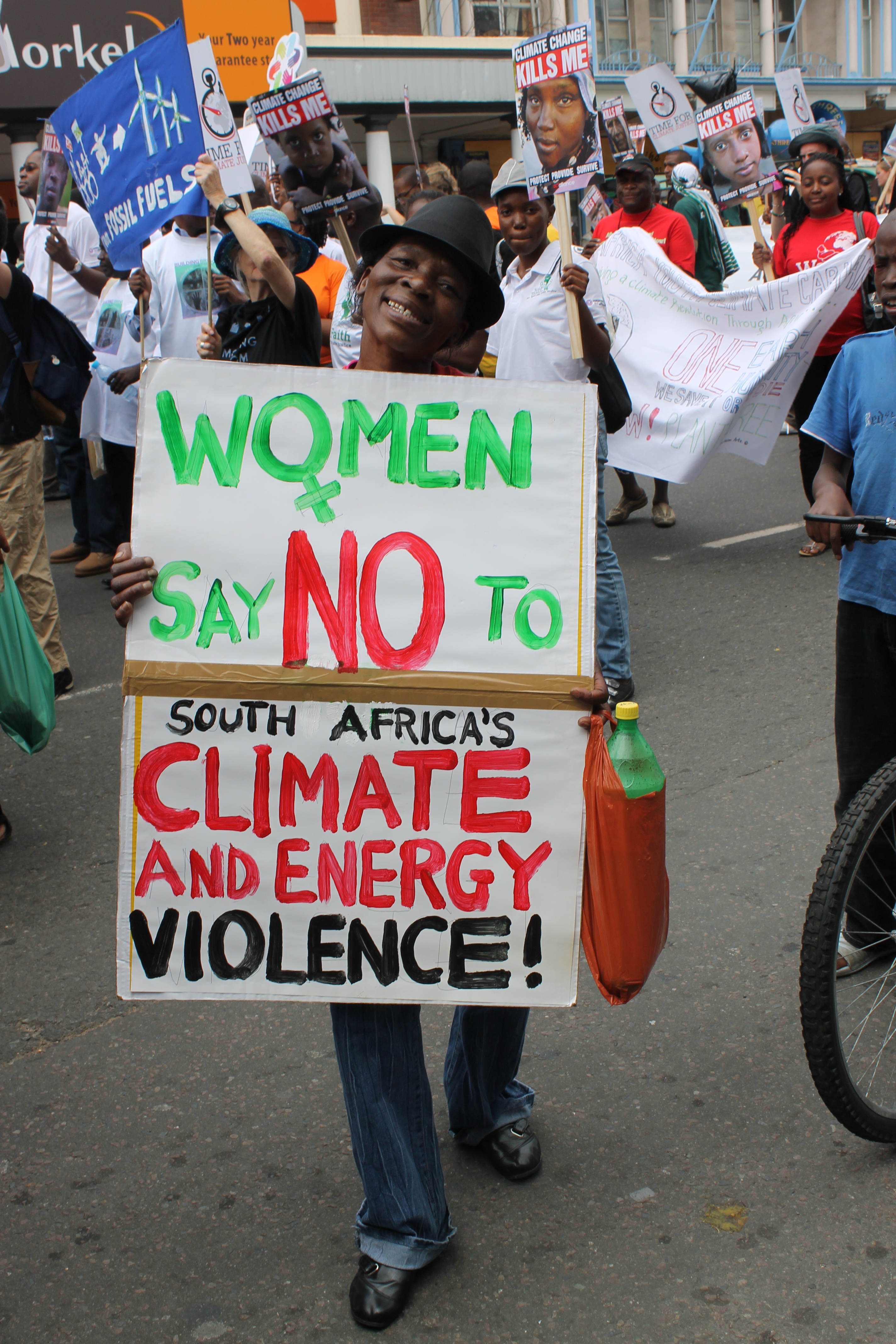
Another awesome sign

Hierald and Kristi (USA)
After the march, we headed down to the beach for some lunch and to see the exhibits for COP along the beachfront. There was also a concert on the beach in the afternoon and into the evening, when there was an NGO party. I saw this interesting sign of Obama on the beach. And as we were traveling back to where we were staying, I also saw signs with Harper’s mug on them. Canada, seriously – what are we doing with a majority Harper government?? I’ve never seen my beloved country in such a sorry state, nor have I ever been more nervous about my own rights and freedoms. Or the survival of Earth.

Will this beach still be here in 20, 50, 100 years?
Bringing Canada to Durban
On Wednesday, we looked at theological and ethical perspectives on creation and on justice. This consisted of some very interesting lectures and discussions, around such questions as “Did the leaves fall from the trees in the Garden of Eden?” It was deep.
Caroline and I were tasked with the evening prayer that day. We wanted to bring a very Canadian feel to this prayer, so we incorporated some United Church of Canada and KAIROS resources into the service. It was very important for us to include an Aboriginal element to the service, and to what we bring to the program as Canadians. Of course, I in no way am speaking on behalf of the Aboriginal peoples in Canada, nor do I presume to be an expert on Aboriginal issues. In fact, I have a lot to learn. And I want to learn a lot more.
I just want to make sure that the views I bring from Canada are not solely a white, middle-class, female perspective, but include other voices, especially the voices of our original inhabitants. And we’re doing that not by speaking for them, but by including examples of climate change in Canada that specifically affect Aboriginal communities, relating things that Aboriginal people have directly told us, and including Aboriginal spirituality in our services. We did this on Wednesday by using a prayer, from a KAIROS resource, that focused on the Four Directions, and had the youth participants move to the East, South, West, and North for different parts of the prayer.
Instead of a hymn, we used what I called “an alternative hymn.” At the North American Forum and Hearings on Poverty, Wealth and Ecology, one of the participants, David Greenfield of the Religious Society of Friends (Quakers) in Saskatchewan performed a song he wrote at the Occupy Calgary site. We taped it and put it on youtube, and so Caroline and I decided to share it with our fellow participants.
Speaking of Occupy, people interested in Israel/Palestine should read this post by United Church of Canada Ecumenical Accompanier Jan McIntyre.
Wednesday evening was pretty awesome. It was Part 1 of our Cultural Night, and there were many different cultures on display. Some danced, some played instruments, and some, like Caroline and I, showed a beer commercial.
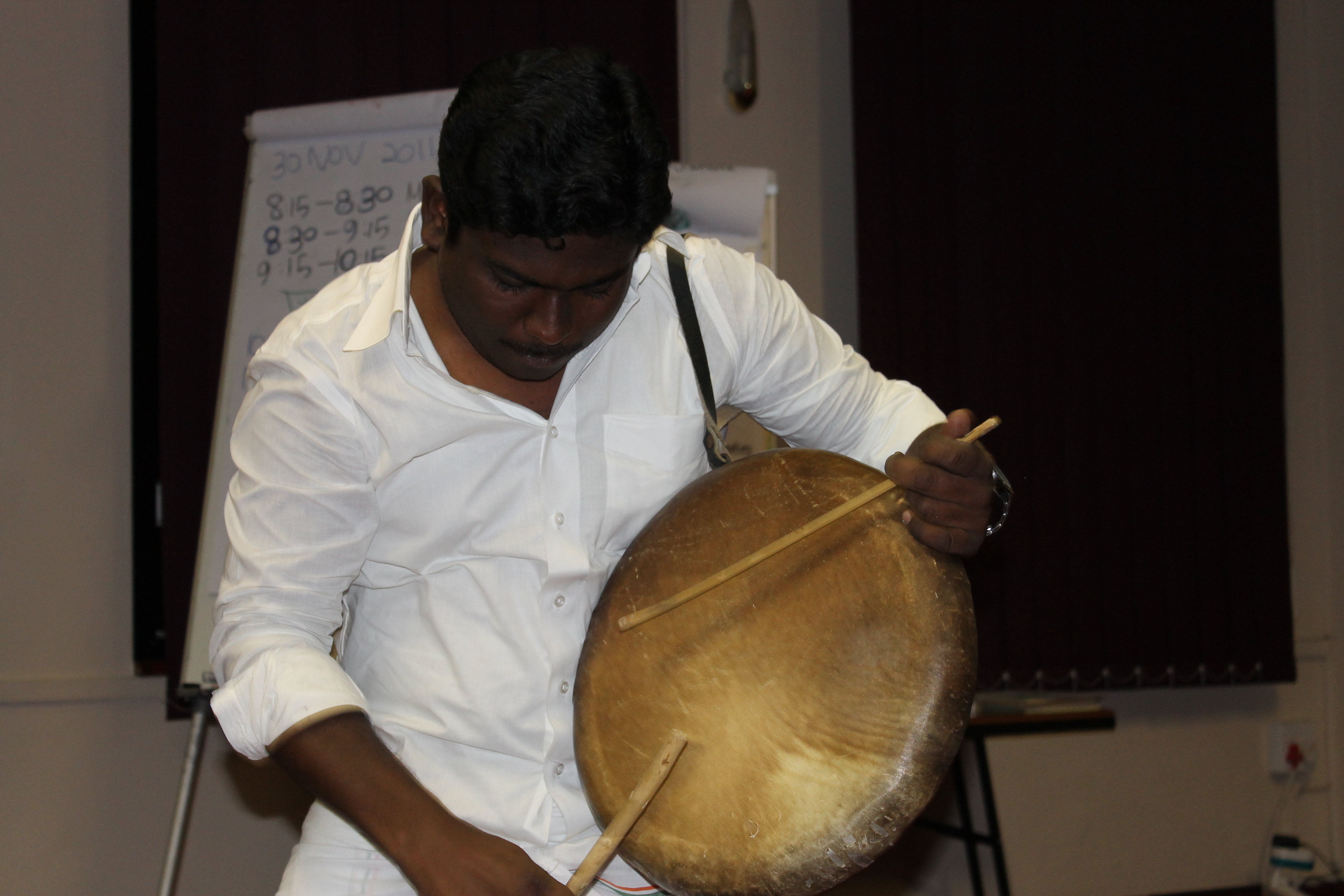
Jeyathilaka Prathaban V. from India

Mike from Malawi
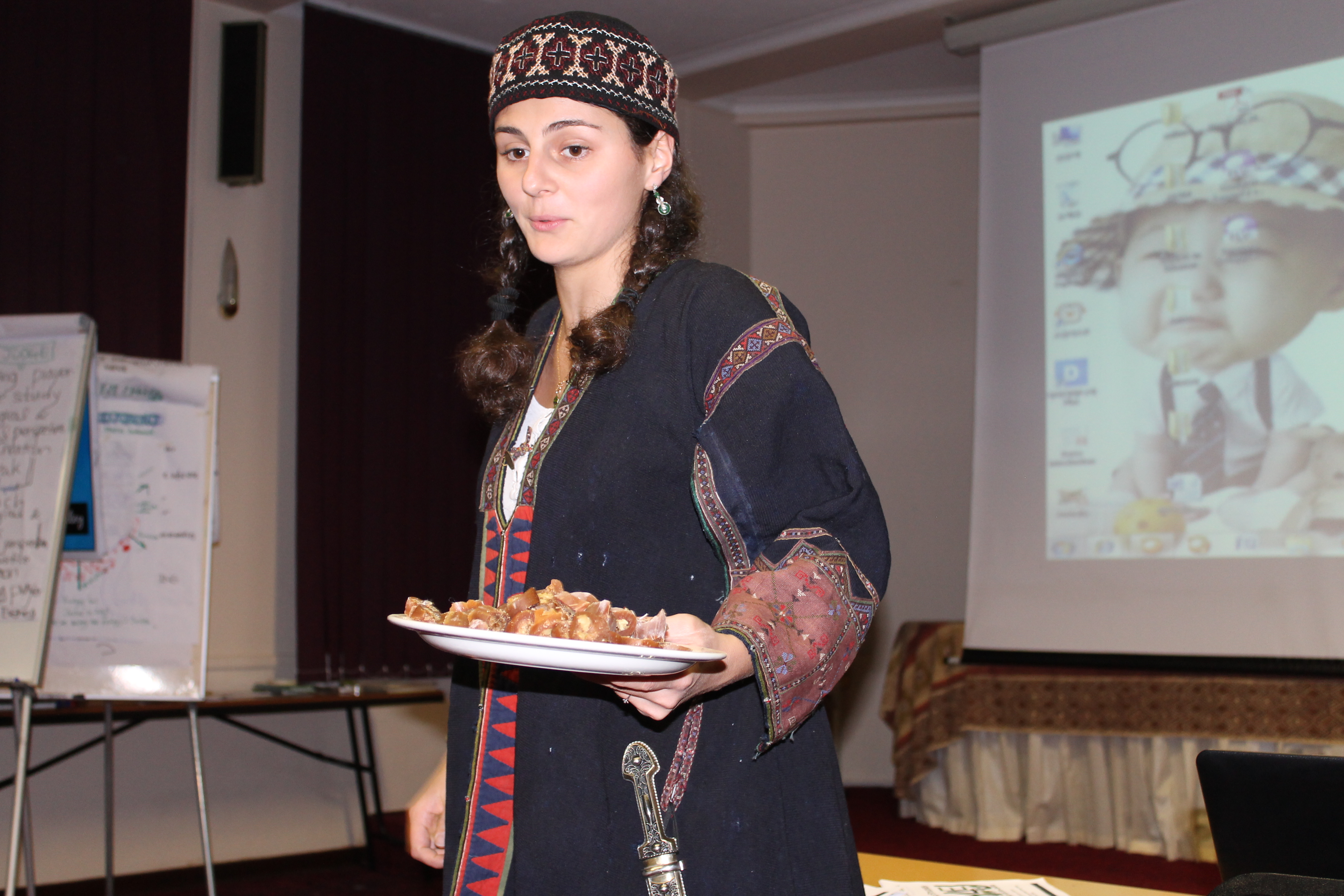
Tamo from Georgia
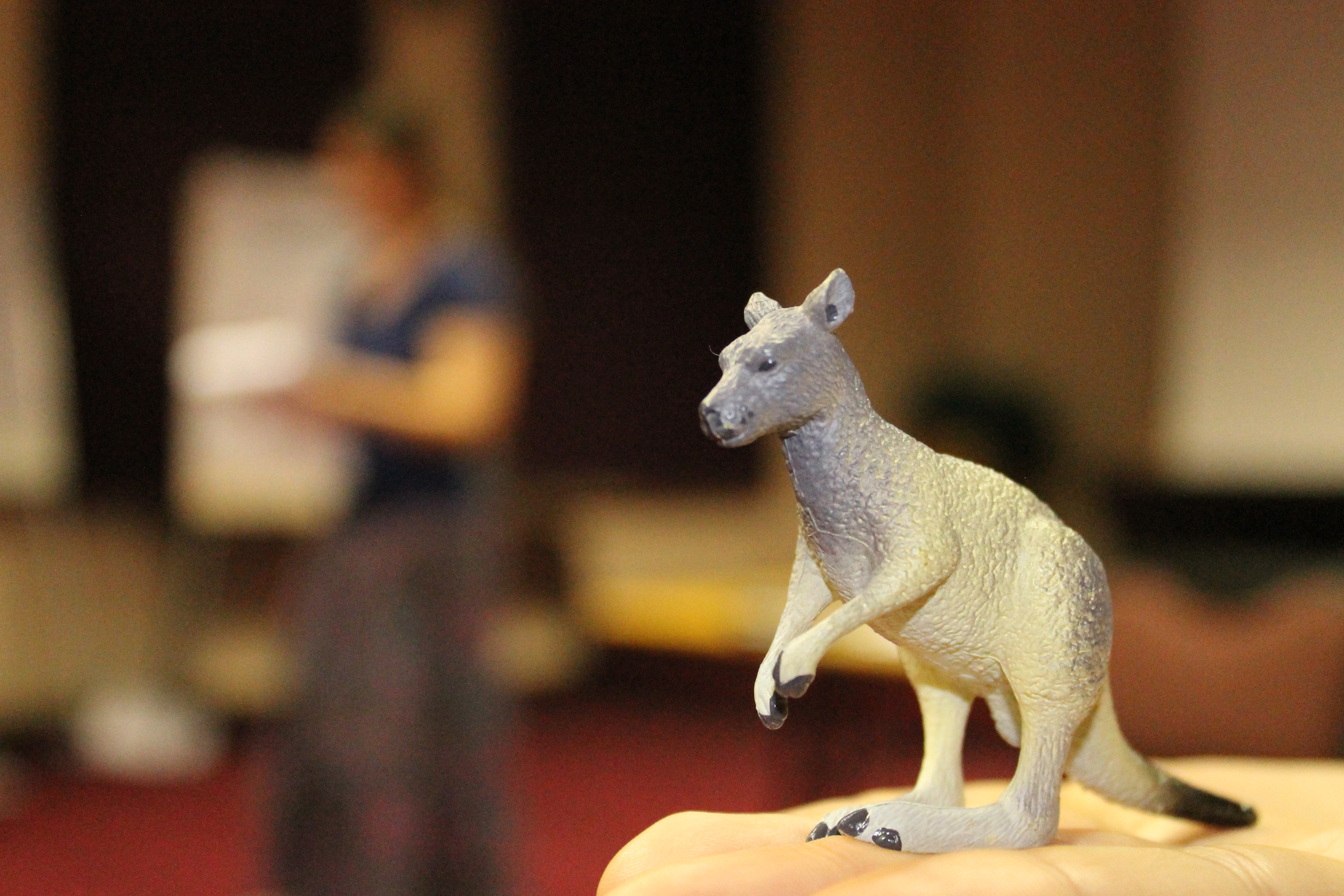
Jessica and her kangaroo, from Australia
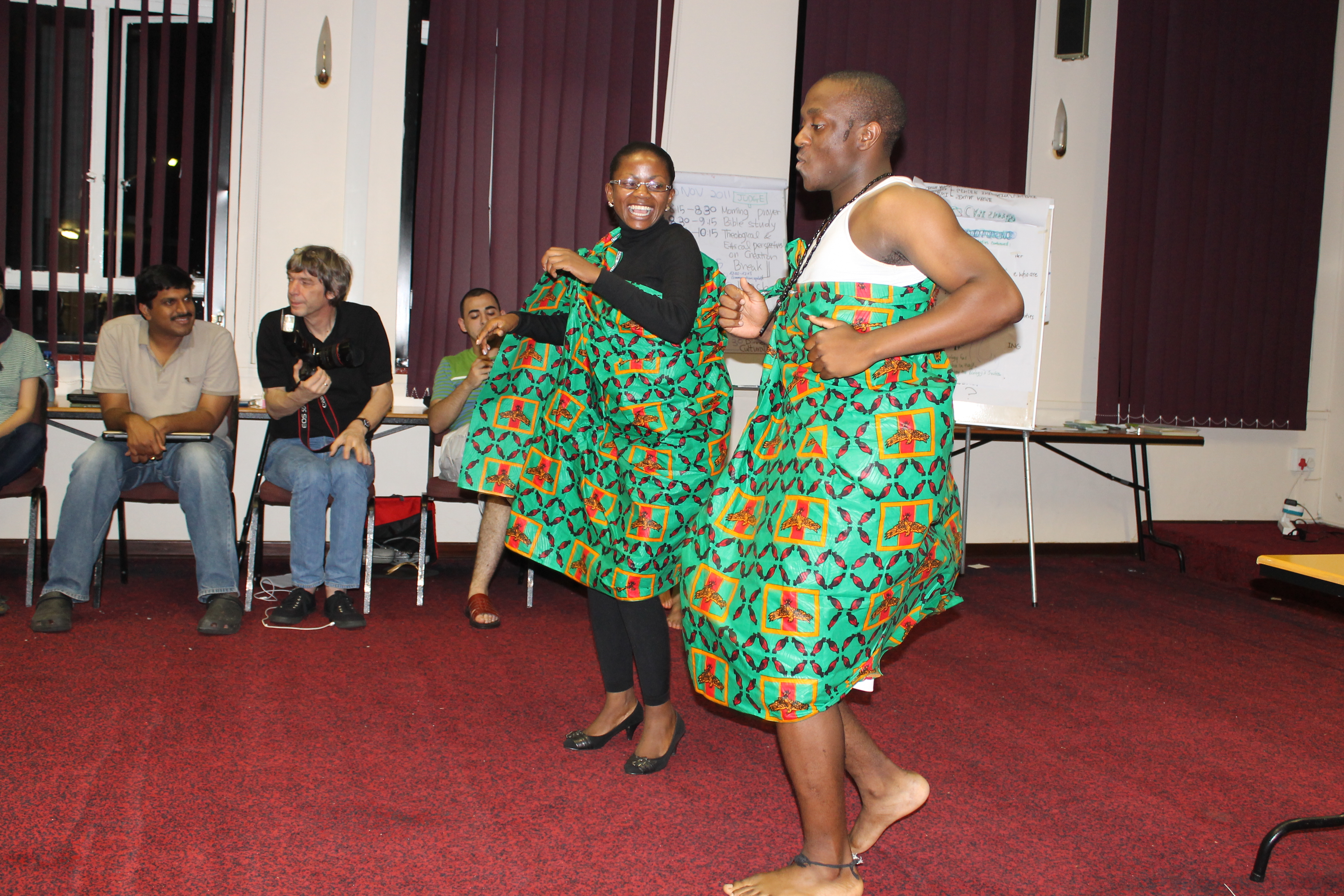
Maggie and Suwilanji from Zambia and South Africa

The traditional Zambian dance evolved a bit…

Raimy from Venezuela

Ra’ed from Palestine, our MC
C’mon, doesn’t every Canadian love this commercial??
Interesting News Features
This is a very quick post, but I just wanted to share with you some of the things I’ve been reading lately.
First, this is an interesting article from a few days ago: “Climate summit opens amid big emitters’ stalling tactics.”
Next, I was reading about a potential new Icelandic eruption. I especially like the ending:
But the biggest threat to Iceland’s icecaps is seen as climate change, not the volcanoes that sometimes melt the icecaps. They have begun to thin and retreat dramatically over the last few decades, contributing to the rise in sea levels that no eruption of Katla, however big, is likely to match.
And I just ran across this but haven’t read it yet, but it looks interesting: Has the Kyoto protocol failed Africa?
And finally, some blogs that I think are really important to read. First, my friend Hierald’s blog offers some really good analysis of COP17. He’s accredited so he’s been going to some of the official events, something I don’t have access to.
Next, the Canadian Youth Delegation blog is pretty awesome, and they update a lot. I just saw their posting about the police in Durban clearing the city of street people, and it’s just appalling. But also makes a lot of sense, since I haven’t seen any street kids around the city:
“Madam, madam! Are you with the press?” I hear a man shout behind me. Before waiting for my answer, he says, “the television won’t show what’s happening in the streets of Durban, madam”. He (I later learn his name is Joshua) goes on to tell me that he has been living on the streets for 25 years. Joshua explains that Durban’s street people are being cleared from the streets in a sweep to make the city more ‘attractive’ in the eyes of the thousands of visitors here for COP-17.
“They’re taking children, madam. Children! The police come, the metro police, and they are taking entire families”. Joshua is visibly outraged. He urges me to tell others about what is happening, and I promise to do so. We part ways at an intersection, waving.
While the Durban police are cleansing the streets from its traces of poverty, COP-17 delegates have it pretty good inside the ICC, with its air conditioning, free wifi, and immaculate washrooms. A maid can be found at all times in the ladies’ washrooms, wiping up drops of water from the sink after a delegate washes their hands, and mopping the floor whether it needs it or not. I enjoy a running joke with the woman who seems to be in charge of cleaning the washroom nearest the CYD booth; we both chuckle at how often I come to pee (it’s like 30 degrees outside – got to stay hydrated!).
Exposure Visits
Yesterday was the day we all went on exposure visits to areas surrounding Durban. I went to Inanda, where local women started support groups for the community, and later youth support groups also formed. This project was initiated by the Diakonia Council of Churches; there are approximately 5 support groups of 100 people each.
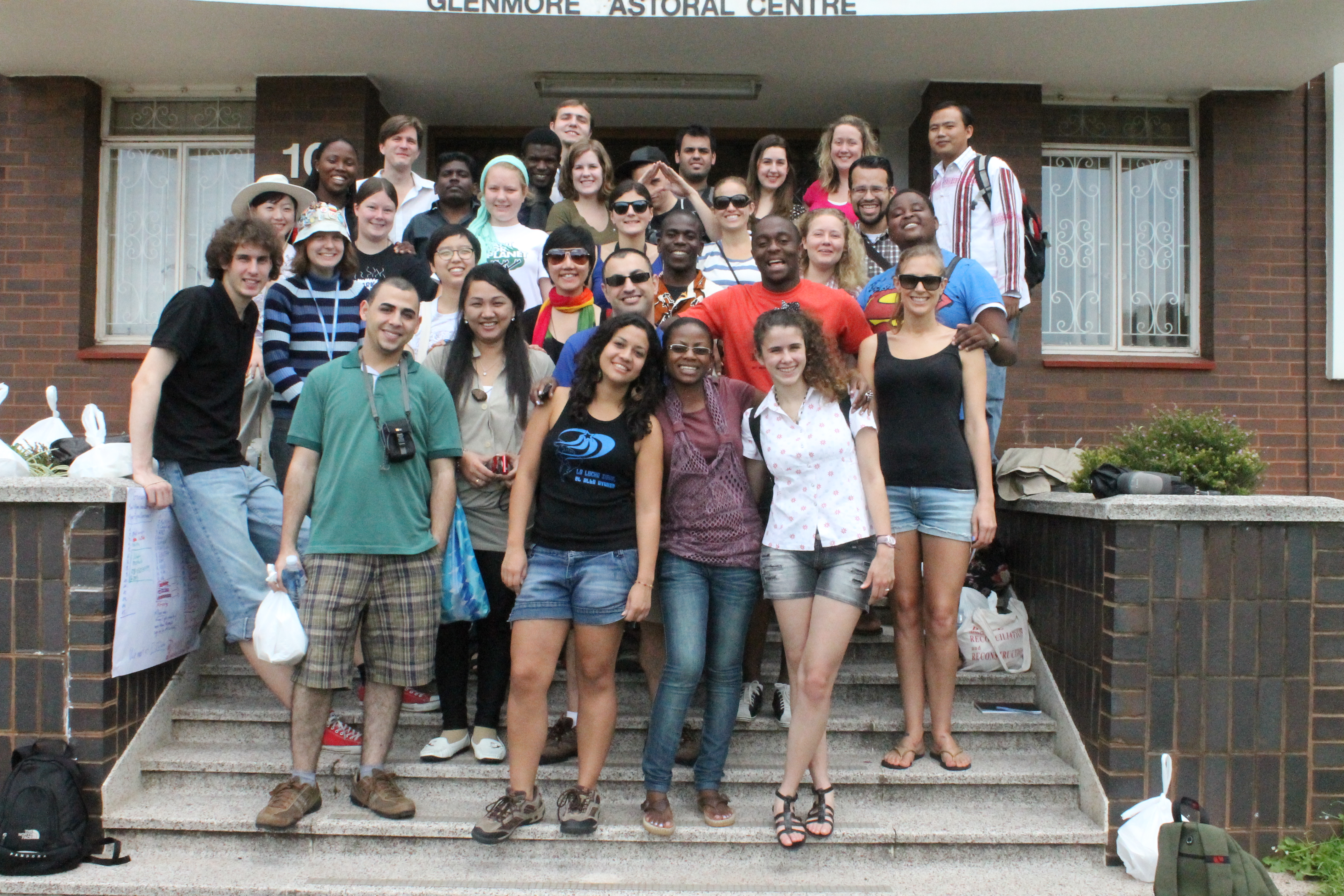
It’s the Youth for Eco-Justice Group!
Our bus was quite late, so we had some fun at the Glenmore Pastoral Centre before leaving.

Funny Poses!
This took forever to assemble, but I think it’s pretty cool:
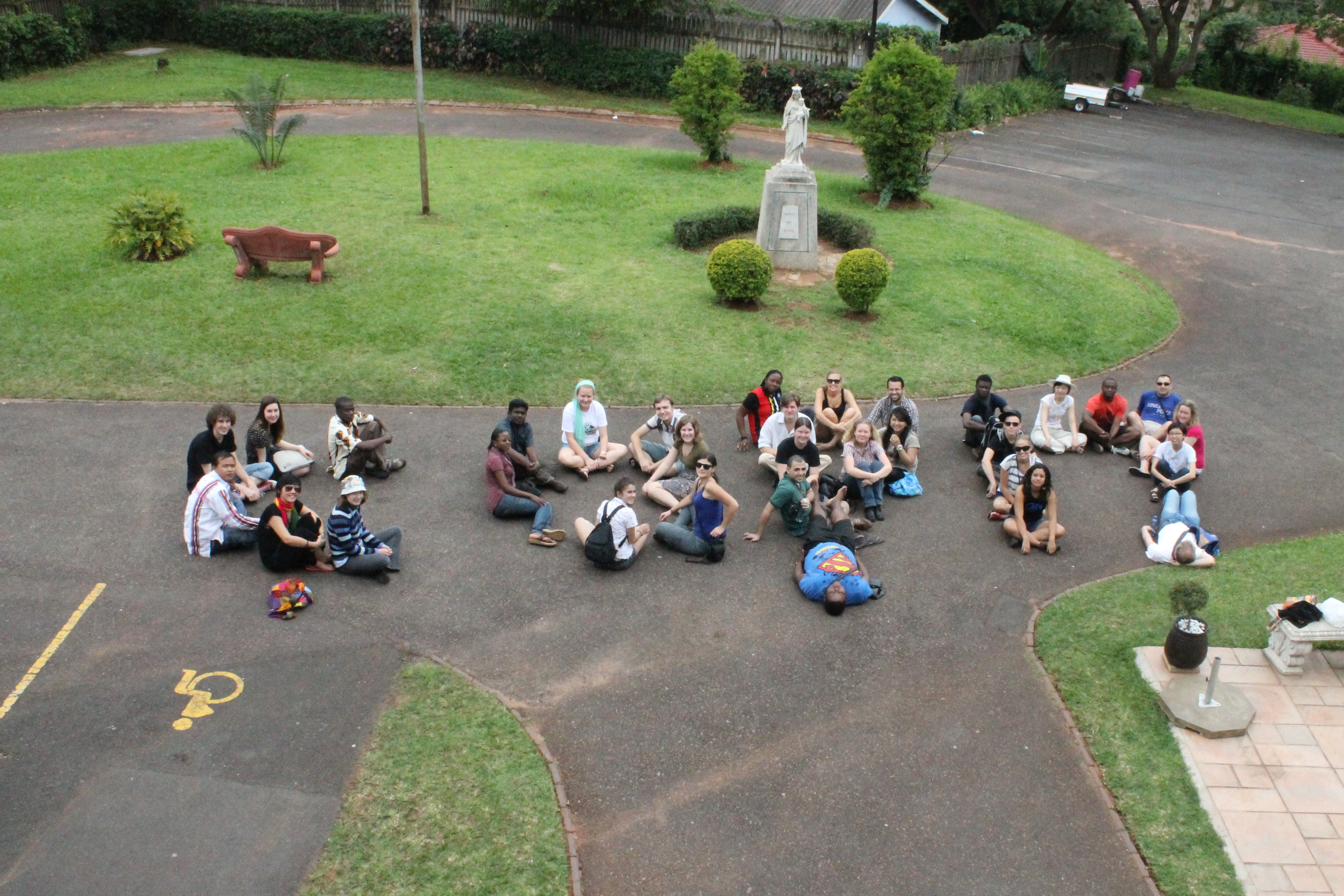
Spelling out COP 17
We headed off to Inanda, traveling into rural Kwazulu Natal, where we would meet those involved with the support groups.

Driving through Mzinyathi, a rural area near Durban
On our way, we stopped by a large dam that had been build by the Afrikaan population 20 years previously. In order to build the dam, 500 families (representing approximately 5000 people) were forcibly displaced. This includes the family of one of the participants in the Youth for Eco-Justice program. The land they lived on is now under water. 20 years on, they are still waiting for compensation.
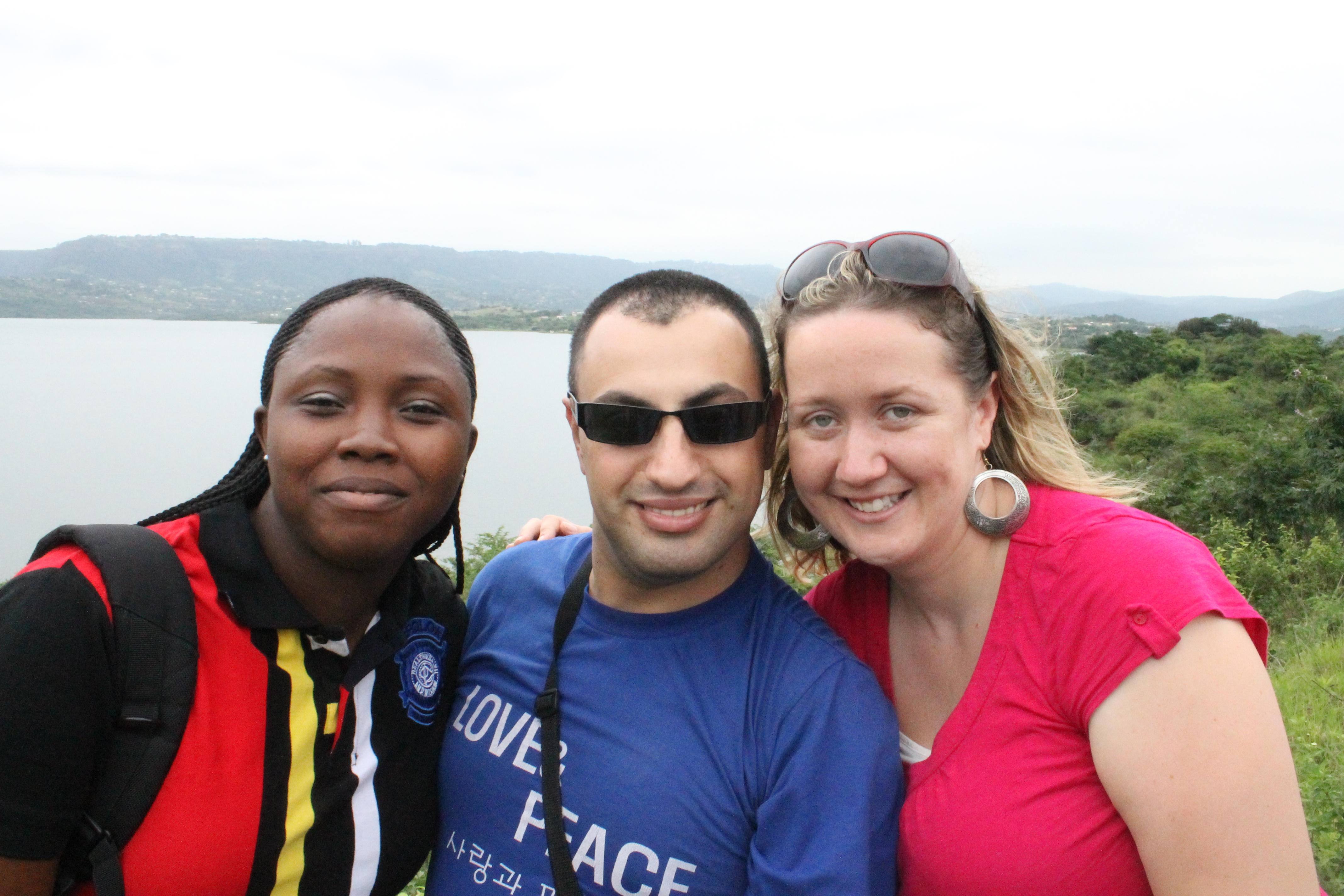
Njideka (Nigeria), Ra’ed (Palestine) and Kaitlin
We all got out to see the dam and started taking pictures with each other and the scenery around us. I didn’t think about this at the time, but now that I see the photos, I realize how odd (and even awful) it was to essentially turn a human rights situation into a tourist stop. It’s not what any of us consciously did, but we were there to see the dam, and photos like the one above, while very nice, were perhaps inappropriate at the time.

Zanele, leader of a youth support group, at the dam
On this visit, it was also evident that racial tensions are still part of the narrative of South Africa. As one unemployed youth said, “I’ve never seen a white person give me a salary.”
We arrived at a public building where the support groups meet. It was in Emaphephetheni and also housed a clinic, which was built in 2003. Previously, there was no clinic for the residents in this area.
The women we met with talked about the community garden they plant seasonally, taking many of the vegetables to those who are sick with HIV/AIDS. We were unable to visit the garden due to flooding on the roads from the intense rain two days previously. It made me wonder how often this happens, and what that means for the food supply.
HIV/AIDS is a big problem in South Africa. This was not helped by the South African government’s denial, until 2009, about the disease. Until then, the Health Minister publicly said that drinking lots of water and eating beet root could treat HIV/AIDS, while the former President said to take a shower.
In Emaphephetheni, the clinic there can give out ARVs, but couldn’t in the past. We were told that many people in this area don’t come to the clinic if they are HIV+ (or suspect that they are) because of a lack of education around the issue, denial of their status, and stigmatization. In some cases, people refuse to go to their local clinic but will go elsewhere so that no one in their community knows that they are HIV+. However, while it is good that they are getting treatment, traveling so far poses its own problems.

Goods for sale, made by youth in the support groups
We were told that the biggest problem here is unemployment. And since the population is relatively poor, youth don’t have the option of going to university – “We just sit at home doing nothing.”
Also, people in the area don’t really know about COP 17. In its abstract form, COP 17 doesn’t appear to affect these people and their lives. We were told that the support groups try to break it down for the local people, by explaining the links between the changes in local weather conditions and the larger problem of global warming and climate change.

Great sign!
I asked about violence against women and whether the support groups deal with that. There have been studies showing that rape is correlated with HIV/AIDS contraction; rape is generally more violent than consensual sex, which makes HIV/AIDS more likely to be transmitted through blood and tearing. While not commenting specifically on this correlation, the women we met with did say that they have had Stress and Trauma sessions, which were very intense but helpful for the women involved.

George and Thandi (support group leader from the Diakonia Council of Churches and also a local resident) outside the clinic
There are also community health workers, and condoms are distributed freely by the government and are not opposed by churches. This was surprising to me, since I’ve dealt with the Catholic Church’s position on condoms in the past (in the Canadian context), and personally feel that I would never work for an organization that refuses to use condoms in its HIV/AIDS prevention program. But, it makes sense in an area (Kwazulu Natal) where the HIV/AIDS rate is 65%. However, the government condoms are not exactly good, as a I was told, because they are stapled to the information paper, rendering them pretty much ineffective. And, the empowerment of women and girls is a huge issue that is being addressed so that they can insist on using a condom.
It was a lot to take in, but was a great day. We spent the rest of the day at the beach, having some R&R and checking out the grassroots environmental projects along the water.
In other news, check out an interview with Bill Phipps, former UCC Moderator, about his fast for Durban.
We Need Some Eco-Sanity: First Impressions of Durban
I arrived in Durban on Saturday, after an early morning flight from Cape Town. The Durban airport was all decked out for COP 17, welcoming everyone to the conference. Some of the advertisements seemed slightly less sincere, however.

Really?!? There’s ethical mining now?
We were dropped off at our accommodation, which is experiencing some serious Internet issues at the moment so I apologize for the lower quality photos in the next few posts.
Sunday was the Interfaith Rally, which I wrote about in my last post. On Monday, the Youth for Eco-Justice program officially began. Joy Kennedy, Program Coordinator for the Poverty, Wealth & Ecology program at The United Church of Canada (and who happens to be my supervisor) came by in the morning to present “The Triple Crisis”: Global Perspectives on Finance, Development and Environment.

Joy Kennedy speaking to the youth
Joy talked about how the Earth Community is in crisis, and how we need to globalize resistance. She inspired us and challenged us to live faithfully in the midst of Empire. “What’s on your placard?” she asked us, after telling us about an awesome placard that said “Fossil Fuels are SO Last Century!” I haven’t thought of anything yet, but I liked Joy’s phrase that “we need some eco-sanity.”
Joy was a big hit – everyone loved her and told me I was lucky to work with her. Of course, I heartily agreed! 😉

Joy and I after her presentation
We also spent some more time getting to know each other – there are over 30 participants in this program, from all over the world, so we bring many different contexts to the table. I heard about subsistence farmers in South Africa, eco-feminism and eco-theology in the South Korean context, and sustainability issues for youth in Brazil, among others.
I truly feel privileged to be part of this program, learning from so many different people from so many different countries. I feel like I’m making some really good friends, and I’ve already been invited to Palestine, Nigeria and Brazil – the travel budget’s going to be tight next year!! 🙂
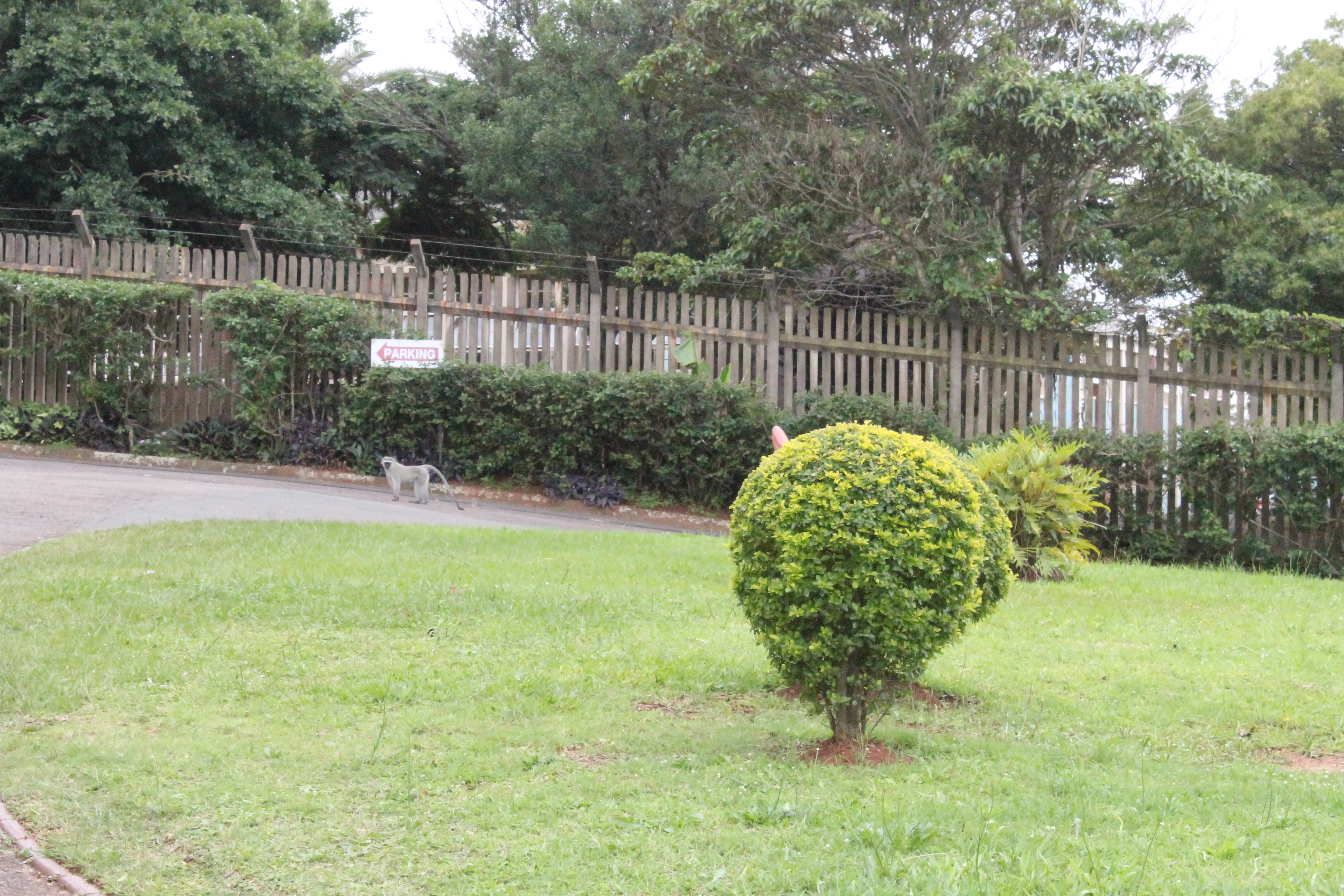
There’s a monkey in our garden!!
Interfaith Rally in Durban
Caroline and I arrived in Durban on Saturday, for the Youth for Eco-Justice Program. This is a transformational training program for young Christians aged 18-30 years. Addressing the links between environmental and socio-economic justice, it is jointly organized by the World Council of Churches and the Lutheran World Federation in the context of UN climate negotiations in the latter part of 2011. It starts with a two-week training and immersion in the context of the international climate change negotiations (COP 17) in Durban, South Africa. In the months following the seminar, the participants will initiate and implement projects in their home context on a volunteer basis.
There are about 30 of us from all around the world, representing 6 continents (poor Antarctica…). I’m loving meeting everyone and (hopefully) making some lifelong friends! Yesterday was our first COP17 event – the big Interfaith Climate Justice Rally at ABSA Kingspark Rugby stadium in Durban.

Painting one of our banners
At the Glenmore Pastoral Centre, which will be our home for the next 2 weeks, we started painting two large banners to take with us to the rally.
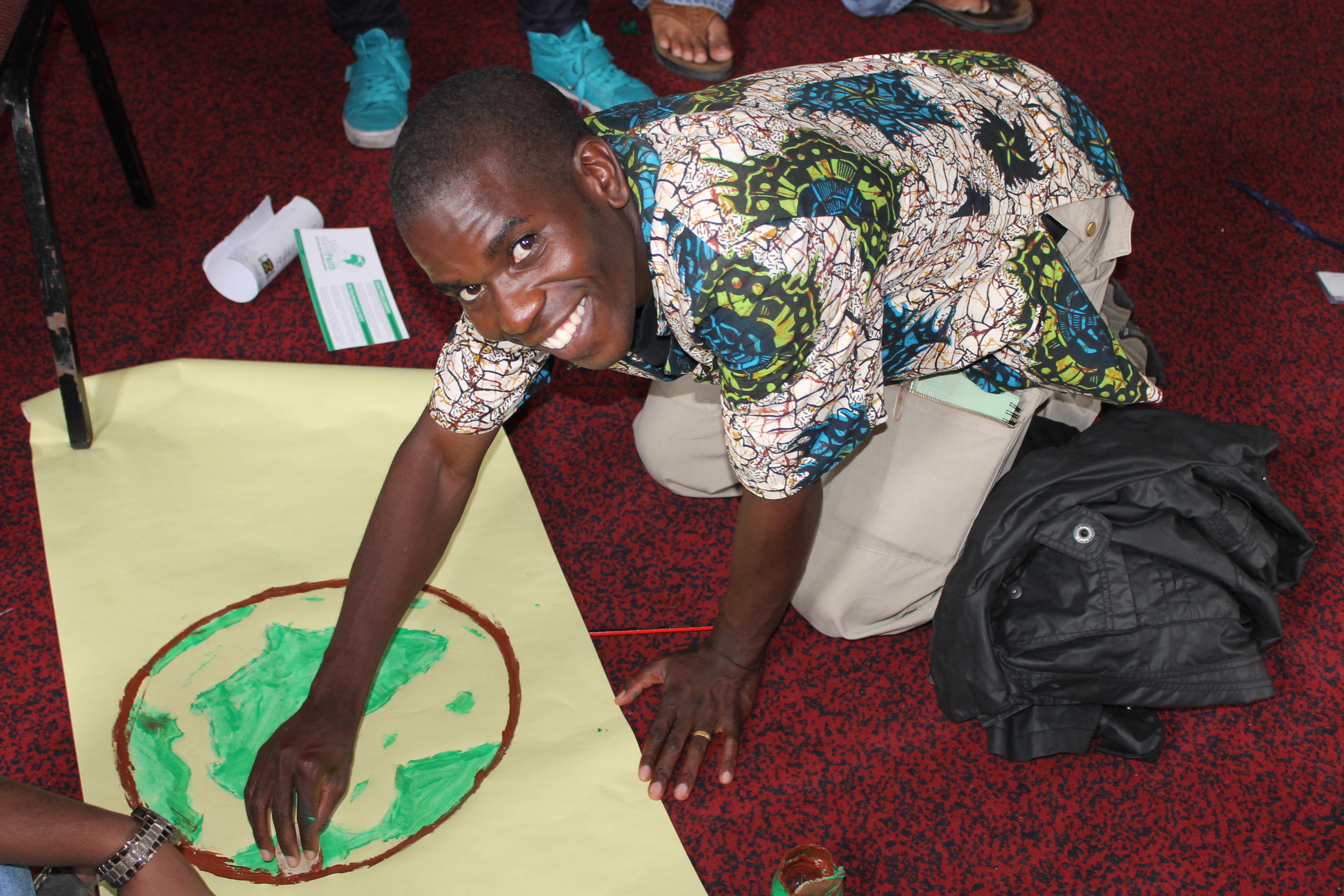
Mike Langa Lulanga, from Malawi, painting the world
One read “Youth 4 Eco-Justice” and the other said “Desmond’s Durban Deal-Makers.”
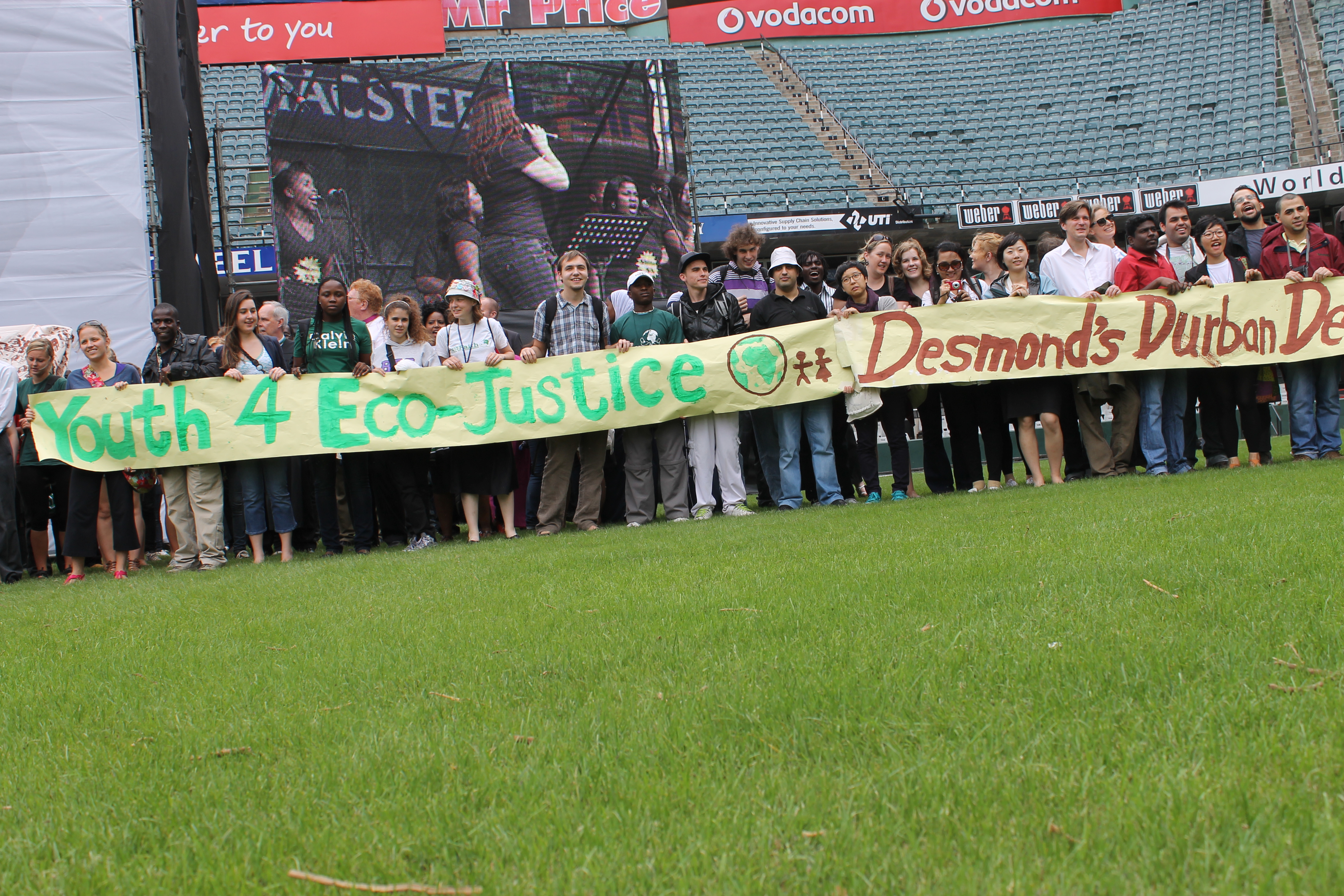
Our two banners
And look – we were on local TV this morning! (near the end – with the Desmond’s Durban Deal-Makers banner)
The turn-out for the rally was frankly pretty disappointing. They were expecting (or maybe “hoping for” is a better word) 40,000 people, but it looked like there were only about 5000 people there. The stadium was pretty empty, but it was still a deeply moving, amazing event.

Faith leaders enter the stadium
It was so inspiring to see faith leaders from around the world, from so many different faiths, coming together to act for climate justice. I especially loved what a Buddhist leader from South African said: “Let’s start changing ourselves and stop changing the climate.”

Faith leaders at the rally
I was particularly excited to see Archbishop Emeritus Desmond Tutu. Especially after everything we saw and learned in Cape Town about Apartheid, I couldn’t wait to hear from one of the men and women who brought down that horrible, awful, racist system. He’s treated a bit like a rock star, which was funny to see, for a faith leader. But his speech was amazing! Some of my favourite quotes from his speech are:
“God wants us to live in a garden, not a desert.”
“We’re meant to live together as harmoniously as one family.”
“Whether you are rich or poor, this is your only home.” He expanded on this by saying that maybe the poor will be wiped out first, but then they’ll be on the other side, beckoning the rich over as well.

200,000 petitions were inside Noah’s Second Ark
After Tutu’s speech, the Climate Justice Africa Youth Caravan presented 200,000 petitions inside a second Noah’s Ark. During their journey, the travelers collected “signed Multi Faith Rally and Concert petitions from the people of Africa calling on negotiators to treat the Earth with respect and embrace a legally binding climate treaty.”
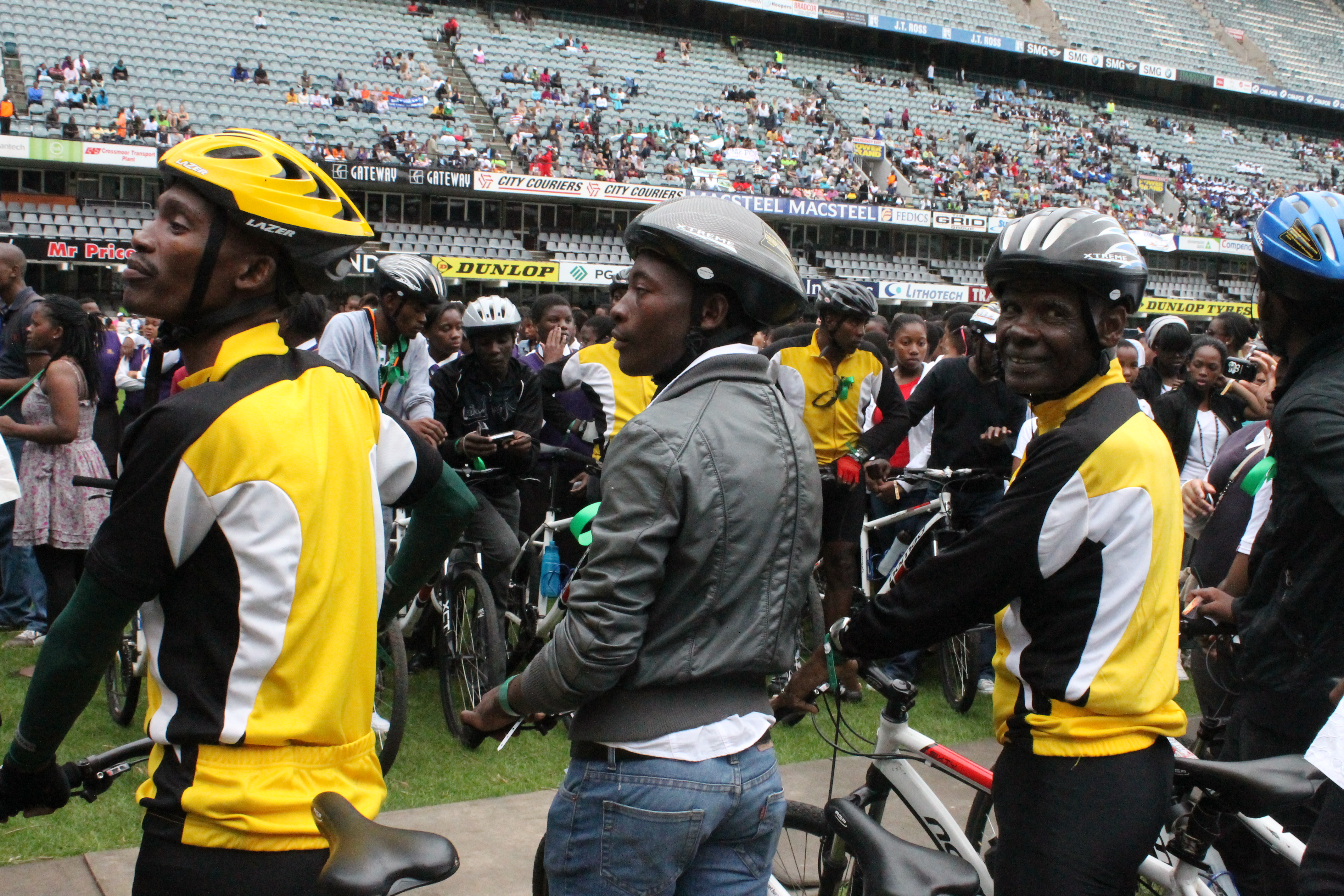
Cyclists who road for 17 days with the Ark
The final number of signed petitions was presented to Tutu, who then presented it to the President of the COP, Maite Nkoana-Mashabane, who is also South Africa’s Minister of International Relations and Co-operation.

Archbishop Emeritus Desmond Tutu presenting the petition to COP President Maite Nkoana-Mashabane
Caroline and I ran into The United Church of Canada’s Moderator Mardi Tindal on the green.
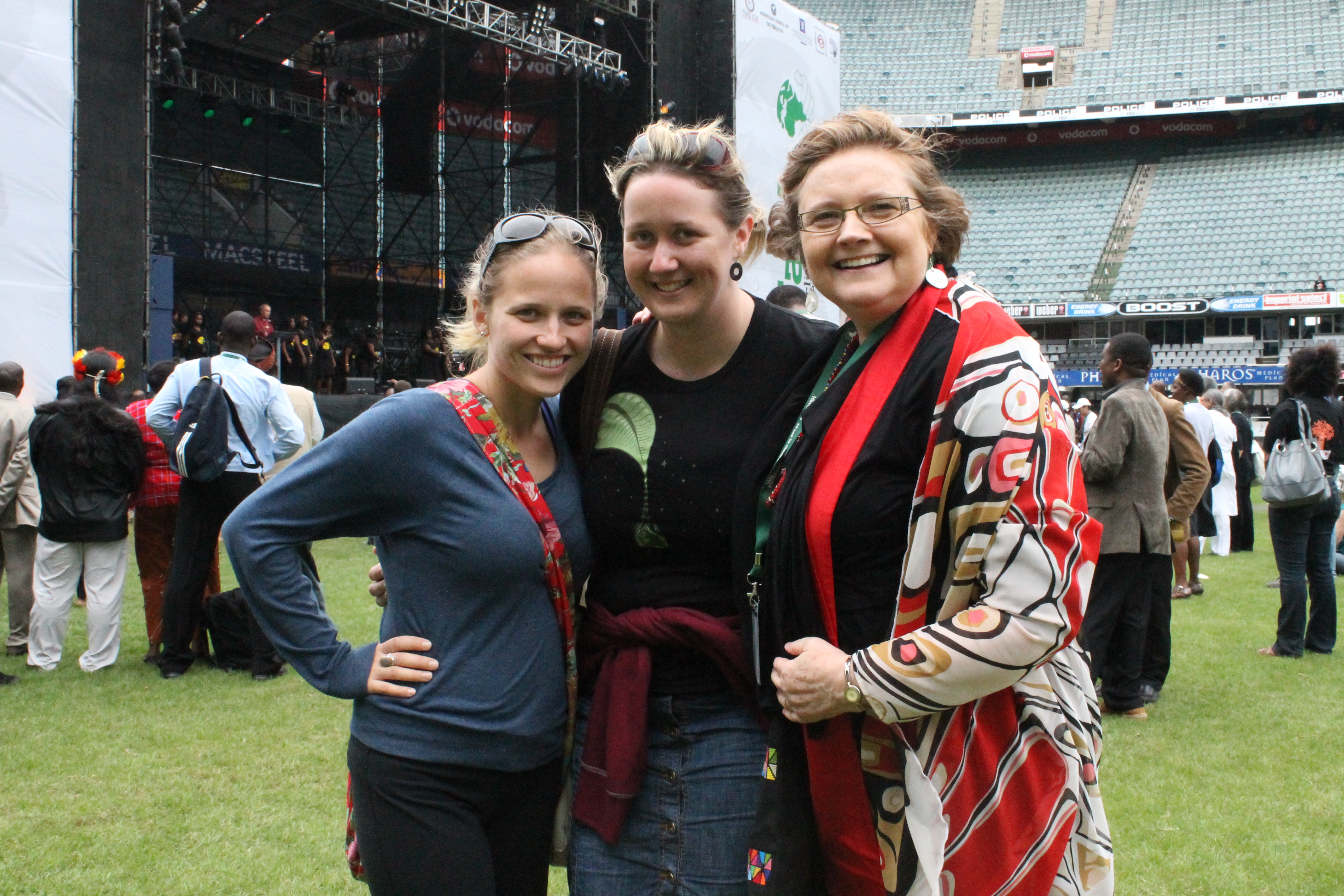
Me and Caroline with The United Church of Canada’s Moderator Mardi Tindal
She had this to say about what she was experiencing at the Rally:
I then followed the Moderator around the green, documenting some of her meetings with other faith leaders.

Moderator Mardi Tindal meeting faith leaders – I love this photo!!

Moderator Mardi Tindal meeting faith leaders

Moderator Mardi Tindal meeting faith leaders
AND, the Moderator and I met Mary Robinson! This was seriously one of the most exciting moments for me. Mary Robinson was the first female President of Ireland AND was also the United Nations High Commissioner for Human Rights from 1997-2002. She’s one of my human rights heroines!
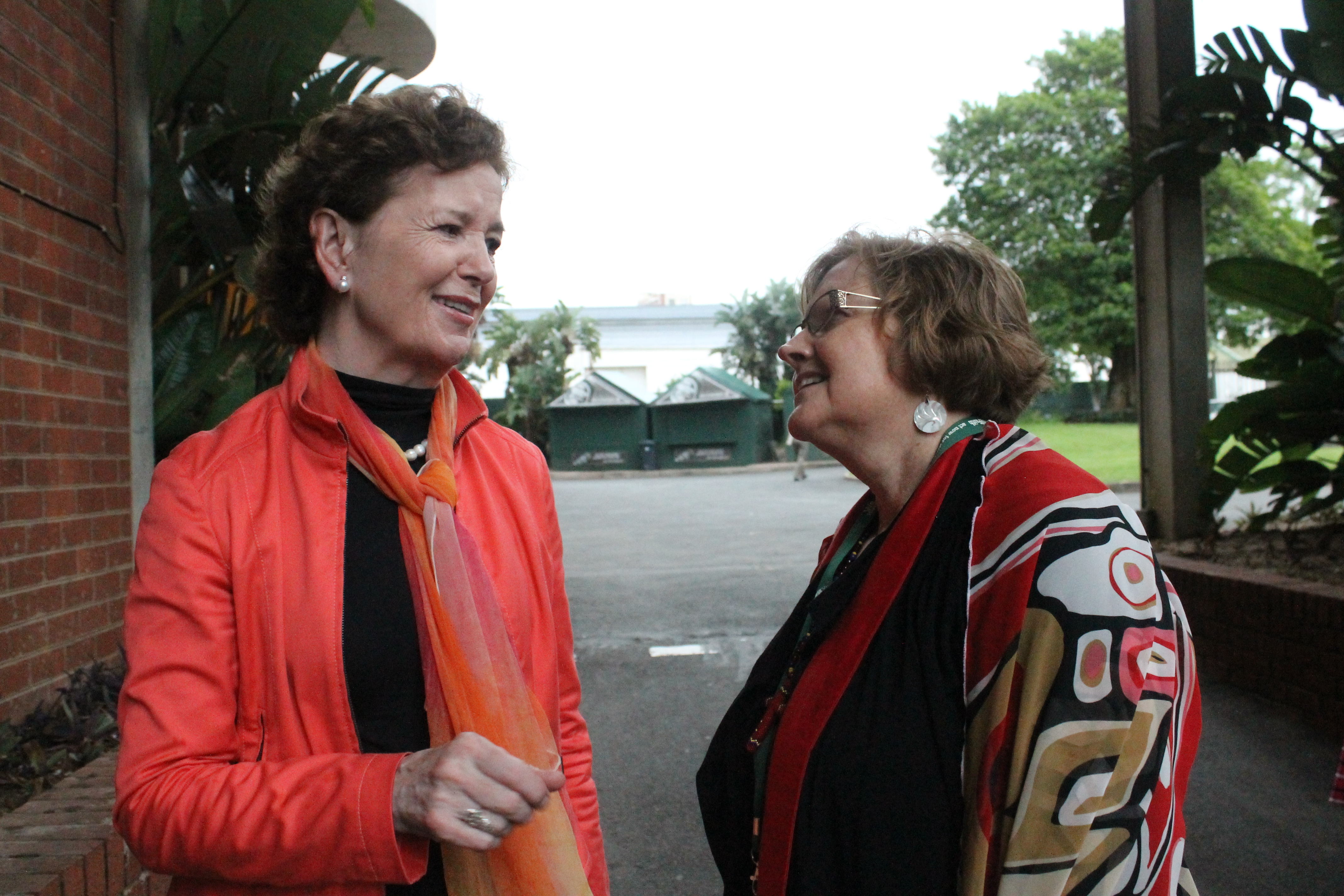
Moderator Mardi Tindal meeting Mary Robinson
Archbishop Emeritus Desmond Tutu came back onstage to greet some of the other speakers, including Mary Robinson, who is a member of The Elders along with Tutu himself. I knew that Tutu had a great sense of humour, and a great laugh, but seeing him and hearing him in person was just an amazing experience. I think all faith leaders, all activists, all people, can learn a lot from him.
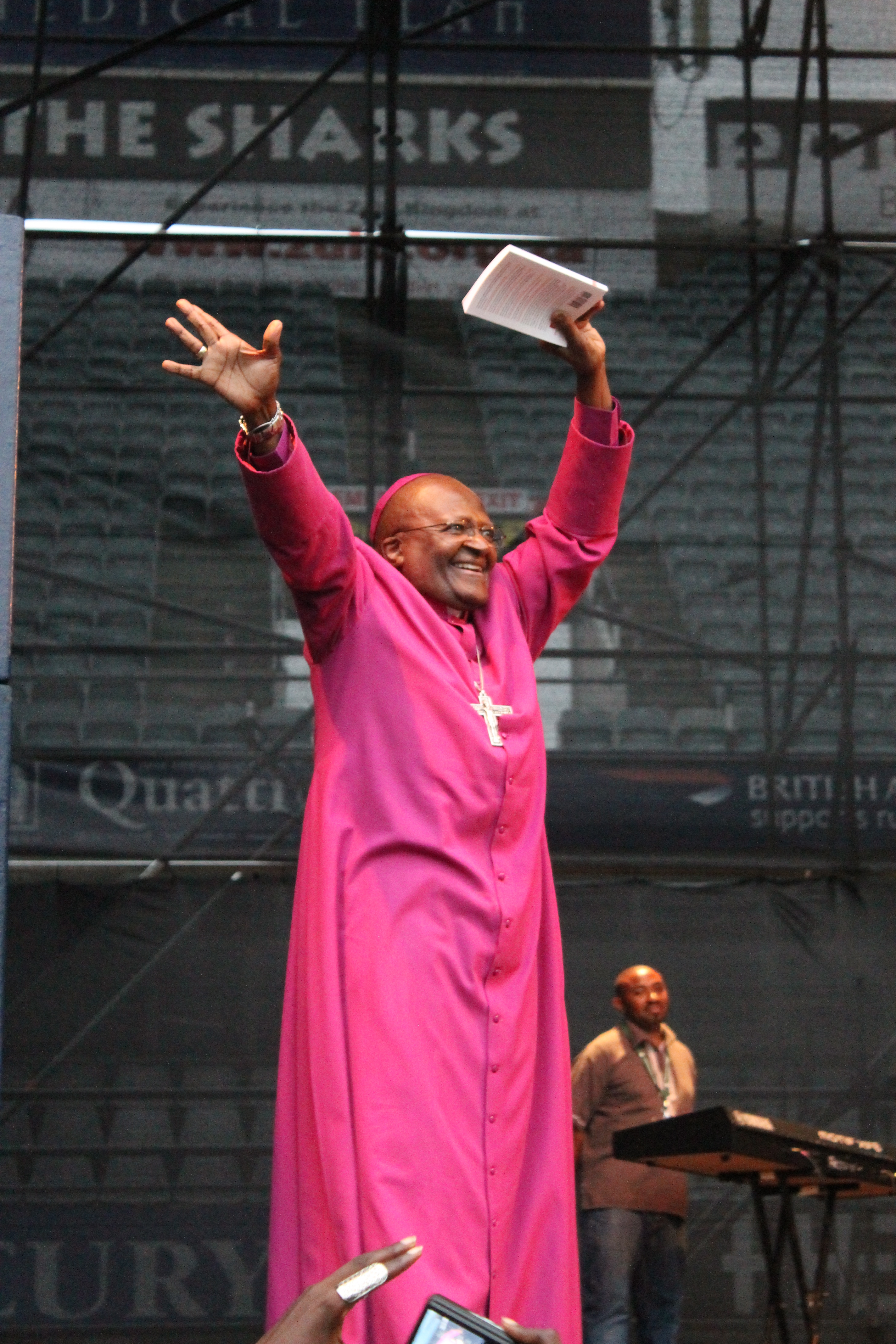
Archbishop Emeritus Desmond Tutu
And some last words from this Great Man: “You are members of one family – the human race. The only race on Earth.”
 Kaitlin Geiger-Bardswich